
Online MBSR has drawn careful attention as researchers test whether a structured digital mindfulness program can support emotional well-being after chronic stroke. The most useful reading of the recent evidence is not “mindfulness works” or “mindfulness fails,” but a quieter and more honest question: what did the trial actually show, for whom, and with what limits?
That careful reading matters because stroke recovery is not only physical. Anxiety, low mood, frustration, fatigue, and changes in identity can all sit close to the surface. As a mindfulness coach, I find the possibility of trainable attention deeply encouraging. As a cautious reader of health research, I also think encouragement must stay close to the data. This material is educational and should not be treated as medical advice. Stroke survivors, caregivers, and family members should discuss mental health symptoms, rehabilitation plans, and meditation safety with qualified health professionals.
What The Online MBSR Trial Tested
Online MBSR Versus Brain Health Education
A randomized controlled trial published in Rehabilitation Psychology in August 2026, with an online publication date of January 5, 2026, studied chronic stroke survivors who were at least three months post-stroke. The trial compared an eight-week mindfulness-based stress reduction program delivered online with an active Brain Health Education control condition, as described in the PubMed record.
The online MBSR format matters because access can be a barrier after stroke. Travel, fatigue, mobility changes, caregiver schedules, and local service availability may make in-person programs difficult. A digital format can lower some practical barriers, though it can create others, such as technology demands, screen fatigue, hearing or vision challenges, and the need for a quiet space.
Why An Active Control Matters
The comparison group was not a waitlist. It received Brain Health Education, which means participants were still engaged in a structured program. That makes the study more informative than a simple “program versus nothing” design. If both groups improve, the finding may reflect shared features such as group contact, routine, attention from facilitators, expectation of benefit, or learning about health.
This is where mindfulness research often asks us to slow down. A practice can feel meaningful to a participant and still not outperform a credible comparison group on measured outcomes. Both statements can be true. A calm breath, a steadier moment, or a feeling of connection may matter personally, but clinical research asks a narrower question: did one program produce a statistically clearer change than another?
What The Outcomes Actually Showed
Anxiety And Depression Findings
The full trial report found no significant group-by-time differences between the mindfulness and control groups for the primary outcomes of anxiety or depression. The same report described improvements across both groups from before the program to after the program and at six-month follow-up for anxiety, depression, and satisfaction with life, but without a specific advantage for the mindfulness group in those primary comparisons trial report.
That pattern is not a failure of mindfulness; it is a reminder to keep claims precise. In this trial, the structured mindfulness program did not clearly beat the active education program on the main mood outcomes. At the same time, participants in both arms appeared to move in a favorable direction across several measures. The research cannot prove that meditation alone caused those changes, because the active control also had supportive ingredients.
Feasibility Signals
The feasibility findings were more encouraging. The research reported strong completion, with 91% of participants completing the intervention, and 75% of those who completed the intervention and immediate post-testing also completing six-month follow-up. For a post-stroke population, that kind of participation is worth noticing.
Feasibility does not equal effectiveness, but it does answer a practical question: can many chronic stroke survivors engage with a structured online program long enough for researchers to measure it? In this case, the answer appears to be yes, with the usual caution that trial participants may differ from people in routine care. People who volunteer for research may have more interest, support, time, or comfort with technology than the broader stroke community.
What Online MBSR Can And Cannot Suggest
Emotional Resilience Without Overclaiming
For emotional resilience, online MBSR may be best understood as a structured attention practice rather than a stand-alone medical intervention. Mindfulness-based stress reduction commonly includes meditation, body awareness, gentle movement, and practices for observing thoughts and sensations without immediately reacting to them. In daily life after stroke, that skill may help a person notice tension, worry, discouragement, or impatience before those states take over the whole moment.
Still, the trial does not justify saying that mindfulness treats depression, treats anxiety, or replaces rehabilitation, counseling, medication, speech therapy, occupational therapy, physical therapy, or medical care. Evidence from one trial, especially one with an active control that also improved, should be read with restraint. Anyone experiencing persistent low mood, panic, distressing thoughts, major sleep disruption, or changes in functioning should seek evaluation from a qualified clinician.
What A Mindfulness Lens Adds
Mindfulness does not ask a stroke survivor to pretend that recovery is easy. It asks for contact with the present moment, including the hard parts, in a way that may reduce automatic struggle. That can mean noticing the breath without forcing it, sensing the body without criticizing it, or observing a thought such as “I should be further along” as a mental event rather than a command.
Readers interested in shorter general practices can compare this trial-focused discussion with related coverage on short mindfulness practices and well-being. For broader health education within the same network, one can visit the Trinity Bariatric Institute which provides related wellness-oriented resources, although stroke-specific care should remain directed by qualified professionals.
Practical Reflection For Stroke Survivors And Care Teams
Access, Fatigue, And Digital Delivery
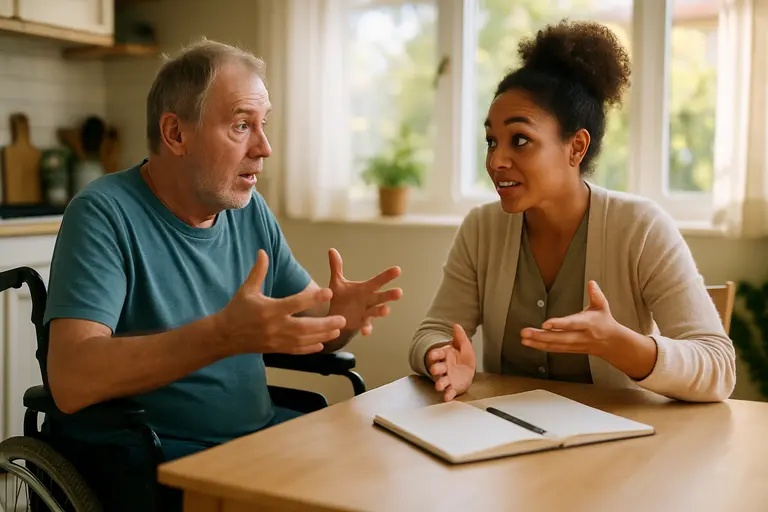
An online program can be gentler on transportation demands, but it is not automatically easier. A person recovering from stroke may need shorter sessions, captioning, caregiver support, reminders, adaptive devices, or rest breaks. Some people may find sitting still uncomfortable or emotionally activating. Others may prefer guided audio, mindful movement, or brief grounding practices rather than longer silent meditation.
These practical details are not side issues. They shape whether a person can participate consistently and safely. A program that is accessible for one survivor may be tiring or frustrating for another. Stroke location, cognitive load, language changes, visual field changes, mood symptoms, and medication effects can all influence how a person experiences a mindfulness session. A clinician or rehabilitation professional can help decide whether a program format fits the individual’s needs.
How To Interpret Personal Response
A research result describes groups, not a guarantee for one person. Some participants may feel calmer, some may feel unchanged, and some may notice discomfort when attention turns inward. The most grounded approach is to treat mindfulness practice as something to monitor, not something to force. If a practice increases distress, confusion, dizziness, pain, or emotional overwhelm, that response deserves professional guidance rather than self-blame.
For many people, the safest starting point is a conversation, not a download link. Ask whether meditation is appropriate in the context of current symptoms, therapy goals, medications, sleep quality, and mental health history. General mindfulness education can support self-awareness, but personal health decisions belong in a clinical relationship.
Questions About Online MBSR After Stroke
What To Ask A Qualified Professional
The recent chronic stroke trial gives a balanced message: digital mindfulness training was feasible and participants in both study groups improved over time, but the mindfulness program did not show a clear advantage over Brain Health Education for the primary anxiety and depression outcomes. That is still useful. It helps patients, clinicians, and program designers ask sharper questions about format, comparison groups, participant needs, and realistic goals.
- Is a structured mindfulness program appropriate for my current stage of stroke recovery?
- Could meditation, body awareness, or mindful movement interact with my fatigue, mood symptoms, pain, or cognitive changes?
- Would I need accessibility supports such as captions, shorter sessions, caregiver help, or adaptive technology?
- How should I respond if a practice increases anxiety, sadness, frustration, dizziness, or discomfort?
- What mental health or rehabilitation services should be considered alongside any mindfulness routine?
Online mindfulness programs may offer a practical route into present-moment awareness for some chronic stroke survivors, but they should be considered as education and supportive practice, not as a substitute for diagnosis, treatment, therapy, or emergency care. Discuss any new routine with a qualified medical professional, especially after stroke or when anxiety, depression, cognitive changes, or other health concerns are present.