
Mindfulness is often described as a mental practice: pay attention to the present moment, notice thoughts and sensations, and return attention when the mind wanders. But a new study suggests that its effects may be easier to understand when researchers look beyond the mind and examine several parts of the body’s stress-response system at the same time.
Published in the August 2026 issue of Physiology & Behavior, the study by Li Shen Chong, Rachel C. Bucher, Edward Merritt, and Elana B. Gordis examined whether just two sessions of a brief mindfulness-based intervention could influence multiple measures of autonomic nervous system functioning. The researchers measured respiratory sinus arrhythmia (RSA), skin conductance level (SCL), and blood pressure rather than relying exclusively on participants’ reports of how stressed they felt.
The results offer an interesting clue about why short mindfulness practices can sometimes produce measurable physiological changes. Participants assigned to mindfulness showed greater RSA increases, lower skin conductance during the intervention, and lower blood-pressure measures compared with an attention-control group. During a later laboratory stress test, the mindfulness group also showed a different pattern of coordination between parasympathetic and sympathetic activity.
The findings do not establish that two short meditation sessions can permanently “reset” the nervous system. The study was relatively small and involved young adults, and the researchers themselves describe the findings as promising rather than definitive. But the multisystem approach provides a more detailed picture of what may happen when mindfulness is practiced during periods of physiological stress.
Why Researchers Are Looking Beyond Self-Reported Stress
Stress is difficult to measure because it is both an experience and a biological process.
Two people can face the same demanding situation and report very different levels of stress. At the same time, their bodies may show changes involving heart activity, sweating, vascular pressure, and other physiological processes.

That is why the new study takes a different approach.
Instead of asking only whether participants felt calmer after mindfulness, Chong and colleagues examined several components of autonomic functioning simultaneously. The autonomic nervous system helps regulate processes that do not require conscious control, including cardiovascular activity and responses associated with arousal.
The study recruited 91 young adults, with 44 assigned to the brief mindfulness-based intervention and 47 to the audiobook attention-control condition. The average age was approximately 19 years in both groups.
This distinction is important because listening quietly to an audiobook can itself provide a period away from everyday demands. By comparing mindfulness with an active attention-control condition rather than simply comparing meditation with nothing, the researchers could better isolate what was associated with the mindfulness practice itself.
The approach also fits into a broader shift toward studying mindfulness through measurable biological pathways. The National Center for Complementary and Integrative Health describes meditation and mindfulness as practices that can involve attention, awareness, and regulation of thoughts and emotions, while also emphasizing that evidence varies depending on the outcome being studied.
For readers interested in stress management techniques, the distinction between subjective relaxation and measurable physiological regulation is increasingly important.
What the Researchers Actually Tested
The intervention was deliberately short.
Participants completed two sessions of a 15-minute brief mindfulness-based intervention. The session included a five-minute breathing meditation, a seven-minute meditation focused on working with difficulties, and a three-minute body scan. The material was drawn from the University of California, Los Angeles Mindful Awareness Research Center.
The comparison group listened to a fictional audiobook for the same 15-minute period.
The researchers then assessed physiological activity during mindfulness or audiobook listening and examined participants’ responses during a standardized psychosocial stress challenge known as the Trier Social Stress Test (TSST).
| Measure | What It Helps Researchers Examine | Main Finding |
|---|---|---|
| Respiratory sinus arrhythmia (RSA) | Parasympathetic/vagal cardiac regulation | Greater RSA augmentation during mindfulness |
| Skin conductance level (SCL) | Sympathetic nervous-system activity | Lower SCL during mindfulness, particularly by the second session |
| Blood pressure | Downstream cardiovascular response | Lower measures following mindfulness and after the stress test |
This design matters because the researchers were not simply asking whether mindfulness “works.” They were asking whether multiple physiological systems changed together.
That is a more demanding scientific question.
The Heart Signal Changed During Mindfulness
One of the clearest findings involved respiratory sinus arrhythmia, or RSA.
RSA reflects changes in heart rate associated with breathing and is commonly used as an index related to parasympathetic, or vagal, cardiac regulation. The researchers found that the mindfulness group showed greater RSA augmentation during the intervention than the audiobook-control group. The effect was statistically significant but described as small.
This does not mean that mindfulness simply makes the heart “slow down.”
RSA is more complicated than resting heart rate. It reflects the dynamic interaction between breathing and cardiac activity, providing researchers with information about autonomic regulation.
The result is interesting because the mindfulness exercise itself included deliberate attention to breathing. Participants were therefore engaging with a bodily rhythm while physiological activity was being recorded.
The researchers interpreted the finding as evidence that brief mindfulness can produce relatively immediate changes in parasympathetic functioning. However, the study does not establish how long that effect lasts after the session ends.
That limitation is crucial.
A physiological change measured during or immediately after meditation should not automatically be interpreted as evidence of a long-term change in stress resilience.
Skin Conductance Provided a Different Window Into Stress
The second major physiological measure was skin conductance level.
When sympathetic nervous-system activity changes, sweat-gland activity can alter the electrical conductivity of the skin. Researchers can measure this response using sensors attached to the skin, providing an objective indicator of sympathetic activation.
In this study, mindfulness was associated with lower skin conductance compared with the audiobook condition. The effect was particularly apparent during the second visit, suggesting that the sympathetic component of the response may have required more than a single exposure to the brief intervention.
This finding becomes more interesting when placed alongside the RSA result.
The mindfulness group did not simply show a change in one physiological measurement. The pattern pointed toward greater parasympathetic activity alongside reduced sympathetic activity during mindfulness.
That is one reason the researchers chose a multisystem approach.
Previous mindfulness research has sometimes produced inconsistent findings because studies measure different biological systems, use different time points, or assess participants at rest rather than during an active mindfulness practice or stress challenge. Looking at several systems simultaneously may help explain some of those differences.
Blood Pressure Changed After the Practice
The study also measured systolic and diastolic blood pressure.
Blood pressure provides a downstream cardiovascular measure that reflects the combined influence of several physiological processes. It therefore adds another layer of information beyond RSA and skin conductance.
The mindfulness group showed greater declines in blood pressure following the intervention compared with the control group. The researchers also found a notable difference following the later psychosocial stress test.
After the Trier Social Stress Test, participants in the mindfulness group had lower diastolic blood pressure than those in the control group, with a Cohen’s d of 0.50, which the researchers characterized as a medium effect.
That result is particularly relevant because it occurred after participants had encountered a stressor rather than while they were simply sitting in a quiet room.
The researchers interpreted the lower post-stressor diastolic blood pressure as tentative evidence that brief mindfulness may influence cardiovascular regulation beyond the immediate meditation period.
Still, the word “tentative” matters.
The study did not show that mindfulness lowers blood pressure in people with hypertension, nor did it test whether repeated mindfulness practice produces clinically meaningful cardiovascular benefits over months or years.
The Most Interesting Finding Was About Coordination
The study becomes more unusual when the researchers examined how the physiological systems interacted.
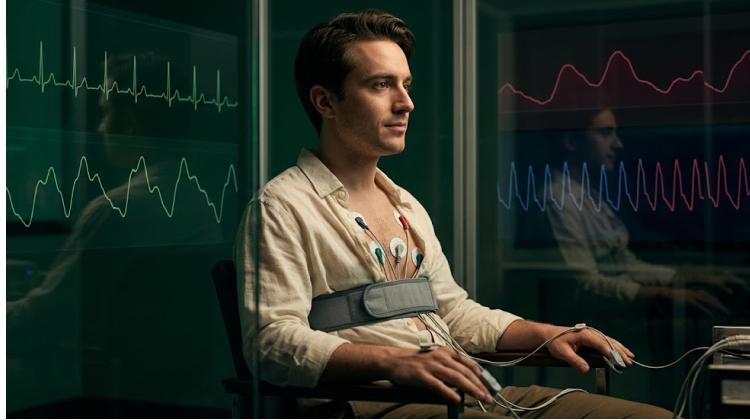
The autonomic nervous system includes parasympathetic and sympathetic branches that can work together in different patterns depending on environmental demands. The researchers were particularly interested in whether mindfulness altered the coordination between RSA and skin conductance during stress.
The mindfulness group displayed an inverse relationship between RSA and SCL during the stress test. In contrast, the control group displayed a positive relationship between the two measures.
The authors describe the mindfulness pattern as more reciprocal coordination, while the control pattern was considered non-reciprocal. Their analysis found that the interaction between the experimental condition and RSA reactivity accounted for an additional 9% of the variance in skin-conductance reactivity beyond the variables already included in the model.
This does not mean the mindfulness participants were immune to stress.
They still experienced a laboratory stressor.
Instead, the results suggest that their physiological systems may have responded in a somewhat different coordinated pattern.
That is a much more precise claim than saying meditation “turns off” the stress response.
Mindfulness May Not Eliminate Stress—and That Could Be the Point
A healthy stress response is not the absence of physiological activation.
The body needs to respond when circumstances demand attention, effort, or rapid decision-making. A useful stress-response system needs to be capable of changing state rather than remaining permanently calm.
This is why researchers increasingly distinguish between stress activation and stress regulation.
The study’s findings fit that framework. During mindfulness, participants showed a pattern consistent with greater parasympathetic activity and reduced sympathetic activity. During the later stress test, however, the mindfulness group still displayed physiological changes, including stress-related autonomic activity.
The difference was in how those systems coordinated.
That could be more meaningful than simply asking whether a person feels relaxed.
A person who can become appropriately activated when challenged and then regulate that activation afterward may have a more flexible stress response than someone whose physiological systems remain poorly coordinated.
The new study does not prove that mindfulness creates this flexibility over the long term, but it provides a reason for researchers to keep investigating the possibility.
Why Two 15-Minute Sessions Matter
The intervention’s short duration is one of the study’s most accessible features.
Participants did not undergo an eight-week mindfulness course. They completed two 15-minute sessions.
That makes the findings relevant to an increasingly common question in wellness research: how much practice is needed before measurable changes appear?
The answer from this study is not “30 minutes permanently changes the nervous system.” Instead, the evidence suggests that two brief sessions were sufficient to produce detectable differences in several autonomic measures under laboratory conditions.
That distinction is important.
A short intervention can produce a measurable physiological response without necessarily producing a durable behavioral or clinical outcome.
The study therefore adds to the argument for investigating brief mindfulness programs as potentially accessible interventions, while leaving the question of long-term effectiveness open.
The Study Has Important Limitations
The researchers are explicit about several limitations.
First, the sample consisted primarily of relatively healthy undergraduate students. That makes it difficult to assume that the same physiological patterns would occur among older adults, people with chronic health conditions, or patients experiencing significant anxiety or stress-related disorders.
Second, only about 67% of participants returned for both study visits, reducing the amount of longitudinal information available within the experiment.
Third, the intervention was delivered through a recorded presentation rather than live instruction. That creates uncertainty about how closely every participant followed the instructions.
Fourth, the physiological measurements cannot establish exactly what caused the observed autonomic patterns. RSA and skin conductance provide useful information, but researchers cannot simply look at a graph and determine a person’s subjective emotional state.
The study therefore provides evidence of physiological differences, not a complete explanation of what participants were experiencing psychologically.
These limitations are especially important because the study received considerable attention for its multisystem design. A sophisticated measurement strategy does not eliminate the need for larger samples and replication.
What This Means for Everyday Mindfulness
For someone practicing mindfulness at home, the findings offer an encouraging but measured message.
A brief session may produce more than a subjective sense of taking a break. It can coincide with measurable changes in autonomic activity.
But the study does not justify claims that a 15-minute meditation can “reset” the nervous system, prevent stress, or permanently lower blood pressure.
The strongest interpretation is more modest: brief mindfulness may influence several physiological systems involved in stress regulation, and those systems may interact differently during subsequent stress.
That idea could eventually influence how mindfulness programs are designed.
Rather than evaluating programs only through questionnaires asking whether participants feel calmer, future research could examine combinations of heart activity, skin conductance, blood pressure, respiratory measures, and other biological indicators.
That approach could reveal why the same mindfulness program helps some people more than others.
The National Institutes of Health provides a useful reminder of why rigorous research matters in wellness: promising findings need to be distinguished from established clinical evidence.
What Researchers May Study Next
The next logical step is larger and longer research.
The current experiment demonstrates what can happen after two brief sessions, but it cannot determine whether the physiological changes persist after weeks or months of practice.
Future studies could compare daily mindfulness with several sessions per week, examine different age groups, and include people with elevated chronic stress or diagnosed mental-health conditions.
Researchers could also investigate whether changes in autonomic coordination predict improvements in sleep, anxiety, emotional regulation, or cardiovascular health.
Another question is whether different forms of mindfulness produce different physiological signatures. The current intervention combined breathing meditation, work with difficulties, and a body scan. Separating those components could help identify which practices are associated with particular physiological effects.
The researchers themselves argue that multisystem measurements may help explain why previous studies of mindfulness and autonomic functioning have produced mixed results.
That may ultimately be the most important contribution of this study.
Why the Multisystem Approach Matters
Mindfulness research has often asked a relatively simple question: Does meditation reduce stress?
The new research asks a more useful one:
What happens across multiple biological systems when a person practices mindfulness and then encounters stress?
The distinction changes how the evidence is interpreted.
Li Shen Chong and colleagues found that two 15-minute mindfulness sessions were associated with greater RSA augmentation, lower skin conductance during mindfulness, changes in blood pressure, and a different pattern of RSA-SCL coordination during a laboratory stressor.
The study involved young adults rather than a clinical population, and the researchers caution that replication with larger samples is needed. It does not establish mindfulness as a treatment for hypertension, anxiety, or any other medical condition.
But it does provide a clearer physiological picture of what short mindfulness practice might be doing.
Rather than simply making the body “calm,” mindfulness may influence how different parts of the stress-response system communicate and adjust to changing demands.
That is a more nuanced explanation—and potentially a more useful direction for future research.
As scientists continue moving from single biomarkers toward multisystem measurements, mindfulness may increasingly be studied not as a generic relaxation technique, but as a behavioral practice capable of interacting with the body’s complex regulatory networks.