
Online mindfulness meditation is gaining research attention as postgraduate students balance advanced study, isolation, deadlines, work, and family responsibilities. The evidence is promising, but it should be read carefully: meditation programs may support stress regulation and wellbeing for some students, yet they are not a substitute for medical or mental health care from a qualified professional.
For distance-learning postgraduate students, the online format matters. Many Master’s and doctoral learners do not share the same campus routines, informal peer contact, or predictable schedules as residential students. That can make structured, live meditation sessions appealing because they create time, repetition, and some social connection. Still, results from short studies should not be treated as guarantees, and needs can differ by mental health history, medication use, sleep, pregnancy, trauma exposure, and other health factors.
Why Online Mindfulness Meditation Fits Postgraduate Study
Evidence From Distance-Learning Students
An online randomized controlled trial conducted between August and December 2024 with 73 distance-learning postgraduate students compared an 8-week Mindfulness-Based Intervention with an 8-week Heartfulness-Based Intervention. The participants were Master’s and doctoral students, and the sessions were delivered synchronously online. Both groups showed significant within-group reductions in stress, anxiety, and depression, along with improved wellbeing at the 8-week point. The improvements in wellbeing and stress were sustained 12 weeks later for both groups, while anxiety reduction held up only in the per-protocol analysis.
That distinction is meaningful. A per-protocol analysis focuses on participants who followed the intervention as planned, which can make results useful for understanding program adherence, but less certain for everyone who enrolls and struggles to attend. For postgraduate programs, the practical message is cautious: structured meditation may help, but design, participation, and follow-up all affect how much confidence readers should place in the findings.
The same research context noted substantial baseline strain among postgraduate students. Anxiety symptoms were reported in 29.2% of Master’s students globally and 34.3% of PhD or doctoral students, with social isolation, loneliness, and financial strain described as contributors. Those figures do not mean every postgraduate student needs meditation; they show why universities and online programs are testing supportive, low-cost approaches alongside formal health services.
Online Mindfulness Meditation And Stress Signals
Online mindfulness meditation may be most useful when it helps students recognize stress signals earlier: racing thoughts before a deadline, irritability after long screen sessions, avoidance of writing tasks, or difficulty shifting from study mode to rest. In the postgraduate studies described in the research, students reported feeling less overwhelmed by academic deadlines, a stronger sense of community, and better ability to self-regulate emotions and maintain focus during online study.
Those reports are valuable, but they remain qualitative feedback rather than proof that the practice works the same way for every student. A cautious interpretation is that meditation can create a repeatable pause during academic pressure. That pause may help students notice what is happening before reacting, but it does not replace academic advising, therapy, medical care, financial support, or changes to workload when those are needed.
What Heartfulness Adds To The Discussion
Biomarkers And Student Stress Research
Heartfulness meditation has also been tested in student populations outside the postgraduate-only setting. In a web-based randomized controlled trial with 78 healthcare students, a 12-week Heartfulness program was associated with a 17.35% reduction in perceived stress and a 27.14% reduction in combined depression, anxiety, and stress scores compared with baseline; control-group changes were reported as non-significant. The same trial reported an increase in DHEA-S of about 20% and a significant decrease in IL-6 in the intervention group, as described in the Heartfulness student trial.
Biomarker findings can sound persuasive, but they need careful handling. Measures such as IL-6, DHEA-S, and stress scales can help researchers examine possible physiological and psychological pathways. They do not mean a meditation practice diagnoses, treats, or prevents a health condition. Students with persistent anxiety, depression, insomnia, panic symptoms, or physical symptoms should seek assessment from a qualified clinician rather than relying on meditation alone.
Brain Measures Need Cautious Interpretation
Neuroscience findings add another layer, but they should not be overstated. EEG research comparing proficient Heartfulness meditators, novices, and non-meditators found higher wellbeing scores among proficient meditators and enhanced occipital gamma oscillation during meditation, a pattern the researchers discussed in relation to awareness and emotional regulation in a Heartfulness EEG pilot study.
This type of research is useful for generating hypotheses about attention and emotion, especially because experienced meditators may differ from novices in many ways, including lifestyle, motivation, and years of practice. It does not prove that a short online course will create the same brain patterns in a stressed postgraduate student. The better reading is modest: long-term practice may be associated with measurable differences, and controlled studies can help clarify what changes are specific to meditation.
Practical Design Features For Online Programs
Synchronous Sessions And Community
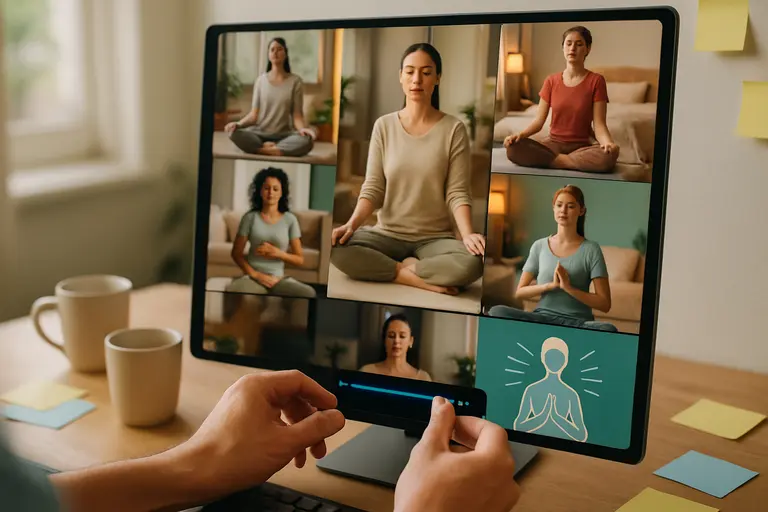
A key design point for online mindfulness meditation is structure. The postgraduate trial used live online sessions, and other research in female students used weekly online Heartfulness sessions with certified trainers over 20 weeks. Live formats may reduce isolation because students have a shared time, a recognizable facilitator, and a brief sense of being part of a group. That may matter for online learners who otherwise study alone for long periods.
Program designers should avoid framing meditation as a personal responsibility that fixes systemic pressure. If deadlines, funding uncertainty, supervision issues, caregiving, or poor sleep are driving distress, meditation may support coping but may not address the source. A useful campus approach can combine skills practice with access to counseling, academic support, peer connection, and clear referral routes. Related coverage of campus mindfulness programs shows how institutions are considering these supports within wider student mental health planning.
Boundaries Around Use And Expectations
For postgraduate students, online programs should be framed as educational wellbeing supports, not clinical treatment. Clear expectations help: meditation may support attention, emotional awareness, and stress regulation, but it may also feel uncomfortable for some people, especially those with trauma histories, intense anxiety, or intrusive thoughts. Participants should be told how to pause, opt out, or ask for support if practice increases distress.
Access also matters. A student in a quiet home office may experience an online session differently from a student sharing a room, caring for children, or logging in across time zones. Programs should consider privacy, session length, attendance flexibility, and whether recordings are appropriate. Readers interested in broader education and wellbeing coverage from the same network can also visit Daily California for more insights and articles.
Online Mindfulness Meditation Questions For Postgraduates
What To Ask Before Starting
Online mindfulness meditation may be a reasonable supportive practice for many postgraduate students, especially when it is structured, voluntary, and paired with access to human support. The current research suggests benefits for stress and wellbeing in short to medium follow-up periods, while Heartfulness studies add early evidence on student stress scales, biomarkers, and brain measures. The evidence does not justify sweeping claims, and individual responses can vary.
- Ask whether a program is educational, clinical, or research-based, and who facilitates it.
- Ask how the program handles distress, privacy, missed sessions, and referral to professional support.
- Ask a qualified clinician whether meditation is appropriate if you have panic symptoms, trauma history, severe depression, sleep disruption, pregnancy-related concerns, medication changes, or any significant health condition.
- Ask whether meditation should be combined with counseling, academic accommodations, sleep support, or other care.
Medical advice should always come from a qualified professional who understands your health history. If stress, anxiety, low mood, or insomnia is affecting study or daily functioning, discuss symptoms with a clinician or licensed mental health professional and ask how meditation might fit safely within a broader support plan.