
A new study from UC San Diego School of Medicine suggests that chronic low back pain may involve the brain’s sense of self in a way that differs from ordinary acute pain. Researchers found that movement-triggered pain flares activated the default mode network (DMN), a group of interconnected brain regions involved in self-referential thinking, internal reflection and the sense of personal identity.
The study, published October 5, 2026 in the British Journal of Anaesthesia, analyzed brain activity in 114 people with chronic low back pain while researchers deliberately triggered a familiar pain response through a leg-raise test. The investigators then compared that response with brain activity produced by a painful heat stimulus.
The contrast was significant. During the movement-triggered chronic pain flare, the DMN became more active. During the acute heat-pain condition, the network showed the deactivation commonly observed during acute pain. The finding gives researchers a different way to think about persistent pain: the experience may involve more than the processing of physical sensation and may become closely connected with thoughts about the body, identity, previous experiences and expectations.
The result does not mean chronic pain is imaginary or that pain exists only in the mind. Instead, it provides evidence that chronic pain involves multiple interacting brain systems, including networks associated with sensory processing and self-referential thought.
The Study Examined 114 People With Chronic Low Back Pain
The research team included Morgan Gianola, Jon Dean, Conan Chen, Daniel Barrows, Gabriel Riegner, Thomas Liu and Fadel Zeidan, all associated with UC San Diego School of Medicine. Zeidan is a professor of anesthesiology, director of the Pain Health and Mindfulness Laboratory and an endowed professor at the Sanford Institute for Empathy and Compassion.
The study focused on people with chronic low back pain, rather than healthy volunteers exposed to a temporary painful stimulus. Chronic low back pain was particularly relevant because the researchers wanted to understand the neural mechanisms behind pain that repeatedly emerges during movement.
The distinction matters. Acute pain is usually tied to an immediate threat, such as touching a hot surface. Chronic pain can persist for months or years and may become associated with movement, anticipation, previous painful episodes and changes in daily behavior.
The researchers used a leg raise test to provoke a movement-related flare in participants with chronic low back pain. While participants completed the task, the team measured cerebral blood flow using arterial spin-labeling functional magnetic resonance imaging, or ASL-fMRI.
For additional context, the World Health Organization’s low back pain data estimates that low back pain affected 619 million people globally in 2020, and describes it as the world’s leading cause of disability. Chronic low back pain is generally defined as pain persisting for more than 12 weeks.
Researchers Compared Movement-Evoked Pain With Acute Heat Pain
The experimental design allowed the researchers to compare two very different forms of pain in the same broad research context.
First, participants completed the leg raise maneuver that could provoke their familiar chronic low back pain. Second, researchers applied a painful heat stimulus to the calf. The heat stimulus represented an acute external threat rather than the participant’s established chronic pain condition.
This comparison provided an important reference point because the brain’s response to acute pain is relatively well characterized. During acute pain, the DMN generally becomes less active as attention shifts toward the immediate external threat.
The chronic pain response was different.
The UC San Diego team observed activation of the DMN during movement-evoked chronic low back pain, while the network deactivated during the painful heat condition. According to the researchers, this represents the first evidence in this setting that a movement-triggered chronic pain flare can activate the brain’s self-referential network rather than suppressing it.
That difference gives the study its central importance. The researchers were not simply measuring whether pain activates the brain. They were examining which brain networks become engaged under different types of pain.
The Default Mode Network Is Often Called The Brain’s “Self Network”
The default mode network is a collection of interconnected brain regions involved in internally directed thought. It has been associated with self-referential processing, autobiographical thinking, reflection and other forms of internally focused mental activity.
That is why UC San Diego researchers describe the DMN as the brain’s “self network.”
The terminology can be misleading if interpreted too literally. The DMN is not a single location where a person’s identity resides. Instead, it is a distributed network involving regions across the frontal, parietal and temporal areas of the brain.
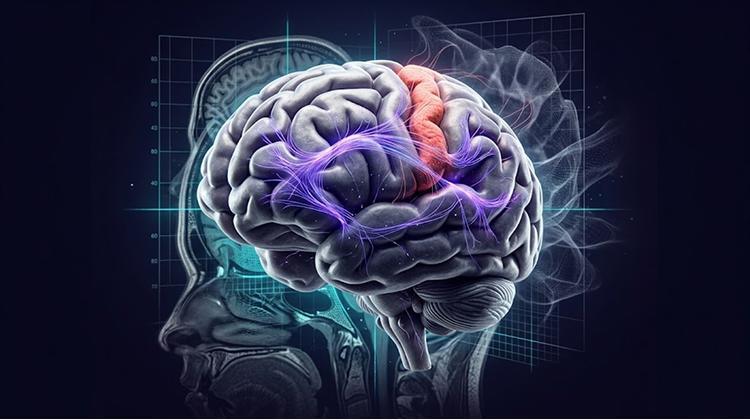
The network tends to become more prominent when attention is directed inward rather than toward an immediate external task. Researchers have also studied it in connection with pain because persistent pain can involve expectations, emotional responses, memories and interpretations alongside sensory signals.
The new UC San Diego findings suggest that these self-related processes may become particularly relevant when chronic pain is triggered by movement.
This is different from saying that thoughts create the pain. The study measured a relationship between a pain flare and brain-network activity. It did not demonstrate that conscious thoughts caused participants’ pain or that changing thoughts alone would eliminate chronic low back pain.
More Severe Chronic Pain Was Linked To Stronger Network Connectivity
The researchers also found a relationship between chronic pain severity and connectivity involving the DMN.
Participants with more severe chronic back pain showed stronger connections between the DMN and the primary somatosensory cortex, a brain region involved in processing sensory information from the body.
This finding is important because it connects two different aspects of pain processing.
The primary somatosensory cortex is closely associated with bodily sensation. The DMN is associated with internally directed and self-referential processing. Stronger communication between these systems may therefore represent one pathway through which persistent physical pain becomes linked with a person’s internal experience of the condition.
The study cannot establish that stronger DMN-sensory connectivity causes more severe pain. Because the research was observational in its brain-imaging analysis, the direction of the relationship remains uncertain.
Still, the association gives researchers a measurable neural target for future experiments.
For people dealing with chronic pain, the broader evidence base also supports a multidimensional view. The National Center for Complementary and Integrative Health’s chronic low-back-pain research notes that mindfulness-based stress reduction is associated with a small improvement in chronic low back pain, while emphasizing that evidence varies across different complementary approaches.
Pain Intensity Was Also Reflected In Sensory And Motor Brain Activity
The study found additional relationships between the intensity of the movement-triggered pain and activity in sensory and motor regions of the brain.
As participants reported stronger pain during the leg raise test, researchers observed greater activity in areas involved in processing bodily sensations and movement. This result fits with the basic idea that a stronger physical pain experience should be reflected in neural systems involved in processing the body.
What makes the study more interesting is that these sensory and motor responses appeared alongside changes in the DMN.
Rather than suggesting that one isolated brain region “causes” chronic pain, the findings point toward an interaction between several systems. A movement can generate physical signals, those signals can be evaluated by sensory networks, and the resulting experience can also interact with internally focused processes associated with the person’s previous experiences and expectations.
That model is more consistent with the complexity of chronic pain than a simple pathway in which a damaged body part sends a signal directly to the brain and produces a fixed pain response.
Heart Rate Changes Also Tracked Pain Flare Intensity
The researchers identified another physiological signal during the movement-triggered pain task: increases in heart rate were a reliable indicator of pain-flare intensity.
Heart rate is not a direct measurement of pain. It can change because of physical effort, emotional arousal, anticipation and other physiological factors. The finding therefore should not be interpreted as a new heart-rate test for diagnosing chronic low back pain.
Instead, it provides evidence that movement-triggered pain flares can involve coordinated changes across brain and body systems.
This is consistent with the broader understanding of chronic pain as a multidimensional experience. Pain can involve sensory processing, emotional responses, attention, movement behavior and physiological arousal at the same time.
The UC San Diego study adds another component to that picture: activity in a network associated with self-referential processing.
The Heat-Pain Experiment Produced The Opposite DMN Response
The contrast with acute heat pain may be the most revealing part of the study.
When participants experienced the painful heat stimulus, the DMN deactivated. That response is consistent with the brain shifting attention away from internally focused thought and toward an immediate external threat.
The movement-triggered chronic pain response was different because the DMN became active.
Researchers interpret this difference as evidence that chronic pain can become integrated with internal processes that extend beyond the immediate sensory event. A chronic pain flare can be connected with memories of previous episodes, anticipation of future pain, concerns about movement and changes in everyday activities.
This does not make chronic pain a psychological disorder. It demonstrates that the neural processing of persistent pain can involve both sensory and self-referential systems.
The distinction also helps explain why chronic pain research increasingly examines psychological and behavioral approaches alongside physical and pharmacological treatments.
The Findings Connect With Earlier UC San Diego Mindfulness Research
The new findings are particularly relevant to meditation because Fadel Zeidan’s research program has spent years examining how mindfulness interacts with pain-related brain mechanisms.
Earlier UC San Diego research found evidence that mindfulness meditation can alter brain processes involved in pain. A 2022 paper involving UC San Diego researchers examined whether mindfulness-induced pain relief was associated with changes in communication between the thalamus and default mode network.
That work proposed that mindfulness may reduce the self-referential component of pain by changing how pain-related information is integrated with networks involved in internally focused processing.
The new chronic low back pain study approaches the question from a different direction. Instead of asking what happens when someone meditates during pain, the researchers first examined what the brain does during a naturally relevant chronic pain flare.
The two lines of research are therefore complementary.
One asks what the brain does during chronic pain. The other asks whether meditation can alter some of those pain-related processes.
That distinction is important because the October 2026 study did not test mindfulness as an intervention. It cannot show that meditation reduces chronic low back pain or reverses DMN activation.
UC San Diego Is Already Testing Meditation For Chronic Low Back Pain
The connection to meditation is more than theoretical at UC San Diego.
The university is currently conducting a clinical trial called Neural Mechanisms of Meditation-Based Interventions for Chronic Low Back Pain. The study is examining how a mindfulness meditation-based intervention affects pain and the brain mechanisms associated with pain relief.
The trial is open to adults 18 to 65 years old with chronic low back pain who have been using prescription opioids for at least three months. The study began in November 2022 and has an estimated completion date of June 2027, with 188 participants expected to be enrolled and approximately 150 participants needed to provide complete pre- and post-intervention data for the primary analysis.
This is especially relevant because the new observational findings provide a possible neural framework for those intervention studies.
If chronic pain is partly linked with increased coupling between bodily sensation and self-referential processing, researchers can investigate whether mindfulness changes that relationship.
That question remains open.
The Study Does Not Show That Meditation Treats Chronic Pain
The strongest editorial caution is that the new research is not a meditation trial.
Participants were not assigned to mindfulness meditation. Researchers did not compare meditators with non-meditators, and they did not measure whether meditation reduced pain.
Instead, the study examined the neural mechanisms associated with movement-evoked chronic low back pain.

The mindfulness connection comes from the research program surrounding Fadel Zeidan and from earlier studies showing that meditation can influence pain-related neural processes. The new findings provide a reason to investigate whether those mechanisms may also be relevant to chronic low back pain.
Current evidence already suggests that mindfulness-based stress reduction can produce small improvements in chronic low back pain, but the evidence is not strong enough to treat meditation as a universal solution. NCCIH describes the evidence for mindfulness and chronic low back pain as supportive but limited, with effects that vary among studies.
For people with persistent pain, meditation should therefore be viewed as a possible component of a broader care strategy rather than a replacement for medical evaluation or evidence-based treatment.
Why The “Self Network” Finding Could Change Chronic Pain Research
The most important implication of the UC San Diego study is conceptual.
For years, chronic pain research has had to account for the fact that pain intensity does not always correspond neatly with visible tissue damage or a single physical abnormality. The new findings add another piece to that puzzle by showing that a movement-triggered chronic pain flare engages a network associated with the individual’s internal sense of self.
This could encourage researchers to study chronic pain as an interaction among sensory signals, movement, expectations, memories, physiological responses and self-referential processing.
It also creates a more specific neurological question for mindfulness research.
If mindfulness can alter the relationship between self-referential processing and pain, then researchers may eventually be able to identify measurable brain mechanisms that explain why some people experience meaningful pain relief from meditation while others do not.
That research could eventually support more targeted interventions.
For now, however, the October 2026 study provides the neural observation rather than the treatment answer.
What The UC San Diego Study Actually Shows
The findings can be reduced to several evidence-based points without overstating what the researchers discovered:
- 114 people with chronic low back pain underwent brain imaging during a movement-based pain challenge.
- The leg raise test was used to provoke a familiar chronic pain flare.
- Researchers measured cerebral blood flow using arterial spin-labeling fMRI.
- Movement-evoked chronic pain activated the default mode network, sometimes called the brain’s “self network.”
- More severe chronic back pain was associated with stronger connectivity between the DMN and the primary somatosensory cortex.
- Pain intensity during the leg raise was associated with activity in sensory and motor brain regions.
- Increased heart rate tracked the intensity of the movement-triggered pain response.
- A painful heat stimulus produced the opposite DMN response, with the network deactivating as expected during acute pain.
The findings do not establish that the DMN causes chronic pain, that chronic pain is psychological, or that meditation will reverse the observed brain activity.
They do provide evidence that movement-triggered chronic low back pain involves the brain’s self-referential network in a way that differs from acute pain.
That distinction could become important as UC San Diego and other research groups continue testing mindfulness and other approaches aimed at changing the subjective experience of chronic pain.
The current UC San Diego meditation research program already includes clinical studies examining meditation, pain and related brain mechanisms, providing a path for future work to move from observation toward intervention.