
For women receiving chemotherapy, sleep disruption can add another burden to an already demanding treatment period. Yoga breathing sleep research is beginning to test whether brief, structured breathing practices may support rest and stress regulation in this setting. The evidence is promising but still limited, so it should be read as education rather than personal medical advice.
As a mindfulness advocate, I see breathwork as a practice that deserves both curiosity and caution. A slow breathing exercise may feel simple, but women undergoing chemotherapy can have changing symptoms, medication schedules, fatigue levels, infection risks, and clinical restrictions. Any new breathing, yoga, meditation, or movement routine should be discussed with a qualified oncology professional, especially during active treatment.
Yoga Breathing Sleep Findings From The Trial
What The Yoga Breathing Sleep Protocol Included
A randomized, sham-controlled trial conducted in Türkiye from November 2023 to April 2024 studied 60 women with stage II–III breast cancer who were undergoing chemotherapy. Participants were assigned to either a yoga breathing exercise group or a sham breathing control group. The active group used a 4-4-4-4 breathing pattern for 5 minutes per session, twice daily, over 21 days.
The results favored the breathing intervention. After 21 days, the yoga breathing exercise group had a greater reduction in perceived stress, with a mean difference of −6.23 and p < 0.001, and better sleep quality, with a mean difference of −2.10 and p < 0.001. Sleep was measured with the Pittsburgh Sleep Quality Index, and no adverse events were reported in the study trial abstract.
The yoga breathing sleep protocol was short and structured, which makes it clinically interesting. A 5-minute practice is easier to study and may be less burdensome than longer programs. Still, the trial included a specific population, a specific cancer stage range, a 21-day intervention window, and a specific breathing pattern. Those boundaries matter when interpreting the findings.
Why The Sham Control Matters
The sham-controlled design strengthens the interpretation because both groups had a breathing-related activity, rather than comparing breathing with no attention at all. That helps reduce the chance that results were driven only by being observed, receiving instructions, or expecting benefit. It does not remove every possible source of bias, but it gives the findings more weight than an uncontrolled program would.
The sleep finding is also worth reading carefully. A lower Pittsburgh Sleep Quality Index score reflects better sleep quality, so the reported −2.10 point difference suggests meaningful movement in the desired direction. The study does not prove that breathing works for every patient, nor does it show whether benefits persist after the 21-day period. It supports the idea that a brief breathing practice may be worth further study during chemotherapy care.
How The Evidence Fits With Broader Yoga Research
Yoga Programs And Sleep Outcomes
The Türkiye trial focused on a breathing exercise, while broader yoga research often combines breathing, gentle movement, relaxation, and meditation. A 2023 meta-analysis of 12 randomized controlled trials included 782 breast cancer patients, with 393 in intervention groups and 389 in control groups. Across the included trials, yoga interventions significantly improved sleep quality compared with control conditions, with a standardized mean difference of −0.40, 95% confidence interval −0.71 to −0.09, and P = 0.01 meta-analysis.
That effect size points to a small-to-moderate benefit across varied yoga programs. The same analysis reported stronger effects for yoga combined with meditation, with SMD = −0.55, and for programs practiced 2–3 times per week, with SMD = −0.69. Programs lasting 6–8 weeks also showed a larger sleep improvement signal, with SMD = −0.86. These findings do not isolate breathing alone, but they help place the newer breathing-focused study in context.
This pattern suggests that yoga-related practices may support sleep for some breast cancer patients, but the exact contribution of breathing, posture, meditation, class contact, expectation, and routine remains uncertain. For readers interested in related symptom-support research after cancer treatment, the site has also covered mindfulness and Tai Chi in cancer survivorship.
Reading The Results With Appropriate Caution
What The Study Can And Cannot Tell Us
The yoga breathing sleep findings are encouraging, but they do not establish breathwork as a medical treatment for insomnia, cancer-related fatigue, anxiety, or treatment side effects. The study was small, with 60 participants, and lasted 21 days. It measured outcomes at baseline and after the intervention, so it cannot answer long-term questions about durability.
The participant group was also specific: women with stage II–III breast cancer receiving chemotherapy. Results should not automatically be extended to people with other cancer types, different stages, different chemotherapy regimens, severe respiratory symptoms, dizziness, panic symptoms triggered by breath focus, or complex medical needs. A breathing pattern that feels calming to one person may feel uncomfortable to another.
No adverse events were reported in the trial, which is reassuring. Still, absence of reported events in a small study does not mean that every person can practice without concern. Some breathing techniques can involve breath holds, changes in carbon dioxide tolerance, or sensations that may be unsettling. During chemotherapy, even low-effort practices should be checked against the person’s medical status.
Practical Issues For People In Chemotherapy Care
Comfort, Fatigue, And Clinical Oversight
From a mindfulness perspective, the most useful lesson is not that everyone should copy the protocol. The lesson is that brief, repeatable practices can be studied, measured, and adapted within clinical boundaries. A structured 5-minute breathing practice may be easier to discuss with a care team than a vague plan to “do more yoga.”
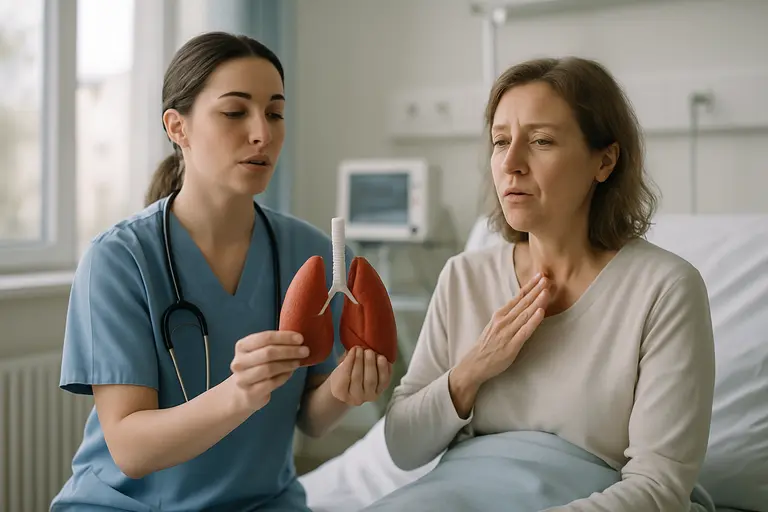
For people in active treatment, the setting matters. Breathwork done lying down, seated, or supported may feel different depending on nausea, pain, neuropathy, surgical recovery, anemia, respiratory symptoms, or medication effects. Clinicians may also have guidance about activity levels on infusion days, after procedures, or during periods of low blood counts.
Health education should also stay separate from personal medical direction. This article cannot determine whether a breathing practice is safe for a specific reader. A qualified oncology clinician, nurse, physical therapist, psycho-oncology professional, or other licensed professional can help assess whether gentle breath awareness, yoga breathing, meditation, or another support is appropriate.
For broader community wellness and health-literacy resources, you can visit CPCWA, a related site within our network. Readers who want more general background on the rise of breathwork research may also find context in our coverage of breathwork techniques.
Yoga Breathing Sleep Questions For Clinicians
What To Ask Before Trying Breathwork
The best use of yoga breathing sleep research is as a starting point for careful conversation. The trial suggests a possible benefit, and broader yoga research points in a similar direction, but neither replaces individualized care. Women receiving chemotherapy should avoid starting, stopping, or changing any symptom-management plan based only on an article or study abstract.
- Is gentle breath awareness appropriate during my current chemotherapy cycle?
- Are there symptoms, medications, blood count concerns, or respiratory issues that should change how I practice?
- Should I avoid breath holds or any breathing pattern that causes dizziness, chest discomfort, panic, or shortness of breath?
- Would a seated, lying-down, or supervised format be safer for my situation?
- How should I track sleep changes, stress, fatigue, or discomfort so my care team can interpret them?
Evidence-based mindfulness is strongest when it respects both research and clinical reality. A short breathing practice may support relaxation and sleep quality for some women during chemotherapy, but needs vary. Anyone facing cancer treatment should seek medical advice from a qualified professional before adding yoga breathing, meditation, or other wellness practices to their routine.