
A week of intensive meditation and other mind-body practices may be enough to produce measurable changes in the brain and biological systems, according to research involving scientists at the University of California San Diego.
The study, published in Communications Biology in November 2025 and brought back into public attention in August 2026, examined 20 healthy adults who completed a seven-day residential retreat. Researchers used functional MRI scans, blood-plasma analysis and laboratory cellular assays to investigate what changed before and after the retreat.
The results were broad. Researchers observed changes in brain-network organization, blood proteins, metabolic activity, immune-related pathways, tryptophan metabolism and biological pathways associated with neuroplasticity and endogenous opioids. However, the findings need careful interpretation because the study was observational, involved only 20 participants and combined meditation with other practices. An author correction published on July 25, 2026, specifically clarified the observational nature of the research and updated the competing-interest statement.
That makes the study interesting for a reason that goes beyond the headline that seven days of meditation can “rewire” the brain. The more important question is what researchers actually measured—and what remains unknown.
What The UC San Diego Study Examined
The research was led by Alex Jinich-Diamant and colleagues, with Hemal H. Patel, professor of anesthesiology at UC San Diego School of Medicine and a research career scientist at the Veterans Affairs San Diego Healthcare System, among the senior researchers.
The team selected 20 healthy adults from a larger group of 561 retreat participants. Fourteen participants were women, and their average age was approximately 46 years. The participants were evaluated before and after a seven-day residential program.
The study was unusually broad in the number of biological measurements it combined. Researchers collected brain-imaging data and blood samples, then analyzed molecular and cellular changes.
| Research Area | Measurement Used |
|---|---|
| Brain activity | Functional MRI |
| Blood biology | Proteomics and metabolomics |
| Gene regulation signals | Exosome-specific microRNA transcriptomics |
| Neuroplasticity | Neurite-growth assays |
| Cellular metabolism | Real-time metabolic assays |
| Participants | 20 healthy adults |
| Retreat duration | 7 days |
The research therefore did not simply ask participants whether they felt calmer after meditating.
It attempted to identify biological signatures associated with the intensive retreat experience.
That distinction is important because the program itself was also much more intensive than the type of mindfulness practice most people perform for 10 or 20 minutes at home.
The Seven-Day Program Was More Than Meditation
The study’s title itself provides an important qualification: it examined a mind-body reconceptualization, meditation and open-label placebo healing retreat.
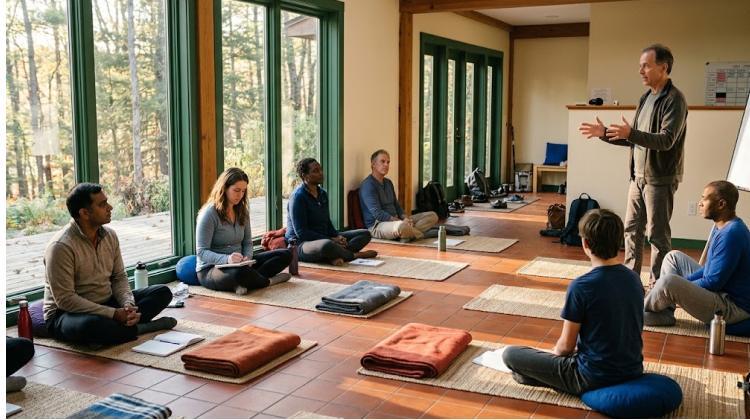
Participants attended a residential program led by Joe Dispenza that included lectures, guided meditation and group healing practices. The UC San Diego description reports approximately 33 hours of guided meditation during the seven-day experience.
That means it would be inaccurate to interpret the findings as proof that seven ordinary days of sitting quietly for a few minutes produces the same biological changes.
The participants were immersed in a structured environment for an entire week.
They followed the retreat schedule, participated in group activities and experienced a setting that was substantially different from normal daily life.
The intervention also included an open-label placebo component, meaning participants knew that some healing practices were presented as placebos. The researchers therefore studied a combination of psychological, contemplative, social and ritual experiences rather than isolating meditation as a single variable.
This is one of the central limitations—and also one of the most interesting features—of the research.
The study asks what happens to the body during an intensive mind-body experience. It does not definitively answer which individual component produced each biological change.
Brain Networks Changed After The Retreat
One of the most striking findings involved the brain’s functional networks.
Researchers used resting-state and meditation-related functional MRI measurements to examine how different brain regions communicated with one another.
After the retreat, the researchers reported reduced functional integration within the default mode network and salience network, as well as reduced whole-brain modularity. The statistical findings were strong within this small sample, with reported p-values of 0.00009, 0.000003 and 0.001, respectively.
The default mode network has been associated with processes such as self-referential thinking and internally directed mental activity. The salience network is involved in identifying and responding to information that is behaviorally relevant.
A change in connectivity does not automatically mean that the brain became “better.”
It means that the relationships among brain regions measured during the experiment changed.
That is a more precise way to understand the finding.
The researchers also observed patterns associated with the subjective mystical-type experiences reported by participants. The study linked these experiences with changes in neural connectivity, including connectivity involving the insula and posterior cingulate cortex.
This is one reason the research has attracted attention beyond conventional mindfulness research. The investigators were examining altered states of consciousness alongside measurable brain activity rather than relying exclusively on psychological questionnaires.
Blood Samples Revealed Changes Outside The Brain
The researchers then examined whether changes could also be detected in the participants’ blood.
They used large-scale proteomic and metabolomic analyses, along with examination of extracellular vesicle and microRNA signals.
The results suggested changes across several biological pathways.
Researchers reported changes associated with neuroplasticity, inflammation, metabolism, endogenous opioid signaling and tryptophan metabolism. The study also examined whether blood plasma collected after the retreat could produce measurable effects when applied to cells in laboratory experiments.
This is where the study becomes particularly unusual.
The researchers were not simply comparing blood-test numbers before and after meditation. They were also asking whether biological material collected from participants after the retreat behaved differently in controlled laboratory conditions.
The findings do not demonstrate that meditation directly changed the participants’ neurons in the way that a drug might.
But they provide evidence that the biological environment represented by blood plasma had changed enough to produce different responses in cultured cells.
That distinction is critical.
Post-Retreat Plasma Promoted More Neurite Growth In The Lab
To investigate potential neuroplasticity-related effects, researchers exposed cultured neuronal cells to plasma collected before and after the retreat.
The cells exposed to post-retreat plasma developed longer neurites than those exposed to pre-retreat plasma. The difference became significant beginning around day four of the laboratory experiment and continued through the observation period.
Neurites are projections that extend from developing neurons and can eventually form part of the structures used for communication between nerve cells.
The researchers also analyzed 7,596 protein targets using a high-throughput SomaScan assay.
Their analysis found that a 26-protein pathway associated with brain-derived neurotrophic factor, or BDNF, was significantly upregulated. However, the researchers specifically reported that BDNF itself was not significantly changed. Instead, proteins including SLITRK1 showed significant increases.
That nuance matters.
It would be too strong to say the study proved meditation directly increased BDNF and rewired participants’ brains.
The researchers found changes in a broader BDNF-associated pathway and observed greater neurite growth when cultured cells were exposed to post-retreat plasma.
Those are different claims.
Metabolism Also Responded In Laboratory Cells
The research also explored whether post-retreat blood plasma influenced cellular energy metabolism.
Researchers treated human neuroblastoma cells with pre- and post-retreat plasma and used a Seahorse XF system to measure metabolic activity.
Cells exposed to post-retreat plasma showed a higher basal glycolytic rate. The study reported a significant increase in glycolytic activity with a p-value of 0.008, while mitochondrial ATP production did not show a significant difference. A separate glycolytic-rate assay also found increased basal glycolysis and lower basal respiration in cells exposed to post-retreat plasma.
This does not mean that participants’ bodies suddenly switched to a different energy system after seven days.
The experiment took place in cultured cells.
The researchers were testing whether factors present in human plasma after the retreat could alter cellular metabolism under laboratory conditions.
That is a valuable mechanistic clue, but it remains several steps removed from proving a clinical benefit in people.
Immune And Inflammatory Pathways Also Shifted
The study reported changes in both inflammatory and anti-inflammatory pathways after the intervention.
The abstract identifies significant changes in inflammatory pathways at p = 0.0001 and anti-inflammatory pathways at p = 0.03. It also reported changes involving endogenous opioid pathways and tryptophan metabolism.
These findings are particularly interesting because meditation research has increasingly moved beyond psychological outcomes.
Researchers are now examining whether mind-body practices can influence biological systems involved in immune signaling, inflammation and metabolism.
Still, pathway changes should not be interpreted as proof that the retreat treated inflammation-related disease.
A biological pathway can change without producing a clinically meaningful improvement in a person’s health.
The study provides evidence of molecular differences after the retreat, not evidence that participants experienced a reduction in a specific disease or medical condition.
Tryptophan Metabolism Adds Another Layer
The researchers also identified changes in tryptophan metabolism and neurotransmission-associated exosome microRNA transcripts.
Tryptophan is an amino acid involved in several biological pathways, including pathways connected to serotonin and melatonin production.
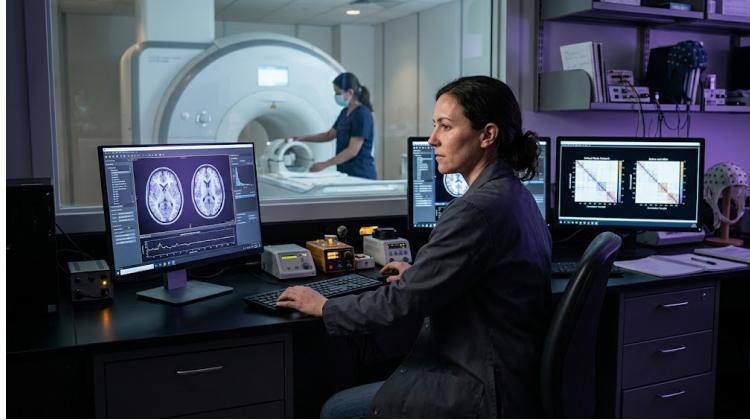
That makes this result potentially relevant to areas such as mood, sleep and brain signaling.
But again, the study does not establish that participants became less anxious, slept better or produced more serotonin because they meditated.
It identified a shift in metabolic signaling.
The significance of that shift is a question for future research.
This is a useful distinction for readers interested in mindfulness techniques: biological plausibility can make a finding worth investigating without making it an established treatment effect.
Why The Seven-Day Finding Is Getting Attention Now
The study was published in Communications Biology on November 6, 2025, but its findings have received renewed attention in August 2026. UC San Diego has highlighted the research through its health-sciences communications channels, and media coverage has focused on the possibility that measurable neural and molecular changes can occur after an intensive week.
The timing is significant because the study sits at the intersection of several growing research areas.
Meditation research is moving toward more precise measurements of brain connectivity. Neuroscience is increasingly interested in how subjective experiences correspond with biological changes. At the same time, researchers studying stress and wellness are looking for interventions that can influence multiple systems simultaneously.
The UC San Diego work brings these areas together.
It asks whether a highly structured mind-body experience can be measured at multiple biological levels at the same time.
That is more ambitious than a standard meditation study focused on a single questionnaire.
The Biggest Limitation Is The Study Design
The most important qualification is straightforward: this was an observational study with only 20 participants.
The researchers themselves acknowledged that logistical limitations prevented them from including age- and sex-matched controls capable of isolating the effects of individual components of the intervention.
Without a comparable control group, researchers cannot confidently determine whether the changes resulted from meditation itself, the retreat environment, intensive social interaction, changes in sleep and daily schedule, the lectures, the placebo-related rituals, or some combination.
The small sample also limits how confidently the findings can be generalized.
There is another issue that became particularly relevant in 2026.
On July 25, 2026, Communications Biology published an author correction that changed the title to make the observational nature of the research clearer, added information identifying which analyses had been preregistered and updated the competing-interest disclosure.
The correction did not retract the study.
But it reinforces the importance of reading the findings as exploratory rather than as proof that meditation alone caused the observed biological changes.
The Joe Dispenza Connection Also Matters
The retreat was led by Joe Dispenza, and he was among the study’s co-authors.
The July 2026 correction clarified that Dispenza is the CEO of and holds a financial stake in Encephalon, Inc., which offers the meditation retreats. The correction also clarified the relationship between senior author Hemal Patel and the InnerScience Research Fund, which supported the research.
This does not automatically invalidate the findings.
It does mean readers should consider the study’s funding and competing interests when evaluating the claims.
The strongest evidence will come from independent research teams using larger samples, appropriate control groups and designs capable of separating meditation from the other components of the retreat.
That next stage is essential if researchers want to determine whether the biological changes are reproducible and whether they have meaningful consequences for health.
Seven Days Does Not Mean Seven Ordinary Meditation Sessions
The most misleading interpretation of the research would be to translate the findings into a simple prescription: meditate for seven days and your brain will be rewired.
That is not what the study tested.
Participants underwent an intensive residential program containing approximately 33 hours of guided meditation alongside lectures and group healing practices.
For comparison, a person practicing mindfulness for 15 minutes each morning would accumulate less than two hours of meditation in a week.
The difference in exposure is enormous.
The study therefore raises an intriguing scientific question rather than establishing a universal timeline for meditation-related brain changes.
It suggests that under intensive conditions, measurable biological differences can emerge over a relatively short period.
Whether similar changes occur with ordinary daily mindfulness practice remains unknown.
What Researchers Need To Test Next
The logical next step is a larger controlled study.
Researchers could compare groups assigned to meditation alone, meditation plus cognitive training, a structured retreat without meditation, and an appropriate control condition. They could then measure the same biological outcomes before and after the intervention.
Longer follow-up would also help determine whether the observed changes persist.
The current research captures a before-and-after snapshot.
It does not tell researchers whether the brain-network changes last for weeks, months or years.
It also does not establish whether molecular changes translate into improvements in mental health, physical health or day-to-day functioning.
These are the questions that will determine whether the findings represent an interesting biological response to an unusual retreat environment or evidence of a reproducible therapeutic mechanism.
Why This Research Could Change How Meditation Is Studied
The most valuable contribution of the UC San Diego research may be methodological.
Instead of treating meditation as something that can be evaluated only through feelings of calmness or questionnaires about stress, the researchers examined the practice across brain networks, proteins, metabolites, extracellular signals and cellular behavior.
That multisystem approach provides a more detailed picture of what may happen during an intensive mind-body intervention.
It also demonstrates why meditation research needs careful experimental design.
The findings are broad, but breadth creates another challenge: the more variables change at the same time, the harder it becomes to identify which part of the intervention caused which outcome.
For now, the evidence supports a cautious interpretation.
A seven-day intensive retreat involving meditation and other mind-body practices was associated with measurable changes in brain connectivity and blood-based molecular signals in a small group of healthy adults. Post-retreat plasma also produced different responses in laboratory cell experiments, including greater neurite growth and altered glycolytic activity.
That is already a significant scientific observation.
But it is not proof that seven days of meditation alone can permanently rewire the human brain.
The next phase of research will have to separate meditation from the rest of the retreat experience, recruit substantially larger populations and determine whether the biological changes persist—and whether they actually translate into better health.
For people interested in mindfulness, the most useful takeaway is therefore not a seven-day promise. It is a more interesting scientific possibility: the brain and body may respond to intensive mind-body practices on a measurable biological timescale, and researchers now have increasingly sophisticated tools to investigate exactly how that response happens.