A Personalized Meditation Practice can sound like a lifestyle preference, yet the research question is more specific: do individual traits change how people respond to different meditation-based approaches? Current evidence suggests that they may, but the findings are not a basis for self-diagnosis, treatment decisions, or promises of benefit. Meditation and breathwork are educational wellness practices for many people, and medical advice should be sought from a qualified professional for health concerns, symptoms, pregnancy-related questions, medication issues, or mental health needs.
Why Traits May Shape Meditation Response
Personality Is A Moderator, Not A Destiny
Personality research does not show that one meditation technique is automatically right or wrong for a person. It does suggest that baseline traits may influence outcomes. In a PubMed-indexed study comparing concentration-, ethics-, and wisdom-based meditation practices, participants higher in neuroticism showed greater prosocial gains when the intervention included wisdom components compared with concentration plus ethics alone; high agreeableness was linked with stronger well-being changes from both intervention types, while high openness was linked with well-being change under the more multi-component intervention, according to the PubMed abstract.
That pattern is useful because it moves meditation away from a one-size-fits-all model. Still, it should be read cautiously. A measured association in a study does not mean that every person with a given trait will respond the same way. Practice history, expectations, health status, stress level, time available, and the quality of instruction can all affect the experience.
Stress Level And Readiness May Matter
A second study of four incremental meditation and yoga treatments over eight weeks reported that higher baseline anxiety, absorption, younger age, lower spirituality, and lower openness predicted stronger positive outcomes in measures such as well-being and emotion regulation, as described in the open-access PMC study. These findings are relevant for people designing programs, classes, or research protocols because they suggest that starting point matters.
For an individual reader, the safer interpretation is modest: if a practice feels difficult at first, that does not prove it is unsuitable; if it feels pleasant, that does not prove it is clinically effective. For people with panic symptoms, trauma histories, severe depression, substance use concerns, or other health conditions, a qualified clinician can help assess whether a meditation format is appropriate and whether extra support is needed.
Personalized Meditation Practice By Trait
Personalized Meditation Practice Signals
A Personalized Meditation Practice is best understood as a structured experiment in attention, not a personality label. Instead of asking, “What type of person am I?” a more useful question is, “What do I reliably notice before, during, and after practice?” Some people notice restlessness during silent breath attention. Others notice self-criticism during compassion-oriented phrases. Others feel more settled when movement is part of the session.
Those observations can guide gentle adjustments. A person who becomes tense during long silent sits might do better with shorter intervals, clearer instructions, or a movement-based format. A person who feels emotionally flat during concentration practice might respond differently to reflective or values-based prompts. These are possibilities, not prescriptions. The evidence supports thoughtful matching, but not certainty.
Matching Techniques Without Overstating The Evidence
The study on concentration-, ethics-, and wisdom-based practices is especially relevant because it compared meditation approaches rather than treating all meditation as identical. That distinction matters. Breath-focused attention, ethical reflection, compassion-oriented practice, and wisdom-oriented inquiry may ask different things of attention and emotion.
For example, a concentration-oriented session may emphasize returning attention to a chosen anchor, such as breathing. A reflective session may involve observing assumptions, intentions, or reactions. A compassion-oriented session may invite kind phrases toward oneself or others. Research has not established a simple formula that maps each trait to one technique, but it does support the idea that differences between people may influence results.
From a public health perspective, access and safety also matter. People often need plain-language education about coverage, costs, and care choices, especially when wellness practices intersect with mental health support. For resources related to these topics in the same network, you can visit America’s Fair Healthcare.
How To Track Fit Without Turning It Into Treatment
Use Neutral Measures
A practical way to evaluate fit is to track neutral, non-diagnostic observations. Examples include how long a person practiced, whether instructions were understandable, whether the practice felt agitating or settling, and whether it was realistic to repeat. These observations are different from claiming that meditation treats a condition. They help identify whether a format is tolerable and sustainable.
A Personalized Meditation Practice may also include stopping points. If a session repeatedly increases distress, dissociation, panic-like sensations, or intrusive memories, that is not a sign of failure. It is a reason to pause and seek guidance from a qualified professional. Meditation can be supportive for some people, but it is not a substitute for medical or mental health care.
Separate Preference From Outcome
Preference and outcome are related, but they are not identical. A person may prefer a practice because it feels familiar, even if another format encourages more useful reflection. Another person may dislike a practice at first because it highlights discomfort that was already present. The research on moderators suggests that who benefits most can differ by baseline characteristics, but it does not remove the need for careful monitoring.
This is where caution is helpful. If a teacher, app, or program claims that one method will work for everyone, the claim is stronger than the evidence presented here. If a program invites gradual practice, clear consent, and referral to clinical care when distress is high, it is more consistent with a source-sensitive approach.
Design Principles For A Safer Practice Match
Start With The Demands Of The Technique
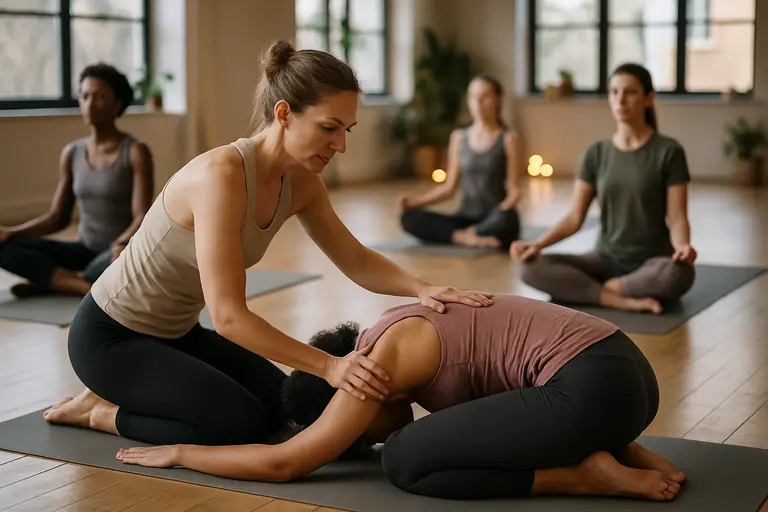
Each technique places different demands on attention and emotion. Silent breath awareness can be simple in structure but challenging for people who are highly activated. Reflective practices may be meaningful but cognitively demanding. Compassion practices may feel supportive for some and emotionally difficult for others. Movement-based meditation may be easier to approach for people who struggle with stillness, though specific outcomes vary.
A Personalized Meditation Practice should therefore match not only the trait profile, but also the person’s present capacity. Capacity can shift with sleep, workload, grief, illness, medication changes, and life stress. A format that felt useful during a calm month may feel too intense during a crisis. That does not make the original practice wrong; it means the context changed.
Keep The Claims Modest
The most defensible claim is that trait-informed matching may improve the chance that a person finds a tolerable, meaningful practice. It is not accurate to claim that personality matching guarantees stress reduction, emotional change, or improved well-being. The research cited here points to patterns across participants, not certain outcomes for a single reader.
For educators and program designers, this evidence supports offering options, explaining why practices differ, and inviting feedback. For individuals, it supports curiosity rather than self-judgment. A practice can be adjusted without turning the adjustment into a medical decision.
Personalized Meditation Practice Questions For Clinicians
Topics Worth Bringing To A Professional
A Personalized Meditation Practice is safest when it respects both personal experience and clinical boundaries. Anyone with a medical or mental health concern should seek medical advice from a qualified professional rather than using meditation as a substitute for care. That is especially relevant if practice brings up intense fear, traumatic memories, unusual sensations, or worsening mood.
- Ask whether breath-focused, silent, movement-based, or compassion-oriented practice is appropriate for your health history.
- Ask what signs should lead you to pause practice and seek support.
- Ask whether any symptoms, medications, pregnancy-related factors, or diagnoses change what type of practice is safest.
- Ask how meditation can fit alongside, rather than replace, existing care.
The most evidence-aligned approach is careful and modest: choose a technique, observe the response, adjust when needed, and involve qualified professionals when health questions arise. Personalization can make meditation feel more humane, but it should remain grounded in caution, consent, and realistic expectations.