
Short Daily Mindfulness is being studied as a practical way to integrate meditation into ordinary routines without requiring long sessions. Recent randomized trials suggest that brief, repeated practice may be associated with lower anxiety, depression, and mind-wandering scores in some adults, but the evidence should be read with care. These findings are educational, not personal health advice. Anyone experiencing distress, worsening symptoms, medication questions, or safety concerns should seek medical advice from a qualified professional.
What Short Daily Mindfulness Trials Show
The most useful recent findings come from randomized controlled trials because they compare groups under defined conditions. Even then, a trial result does not mean every person will experience the same outcome. Mindfulness studies often differ in population, session length, adherence, baseline distress, app design, instructor support, and follow-up period. Those details shape what the results can and cannot tell us.
April 2026 Remote Meditation Trial
An April 2026 fully remote randomized controlled trial enrolled 299 meditation-naïve adults and tested a focused-attention meditation practiced for 10 minutes each day over 8 weeks. The report found significant reductions in anxiety and mind wandering, and the benefits were described as stable during an 8-week follow-up. Participants with higher baseline symptoms had the largest improvements, as detailed in a preprint report on remote meditation research.
That result is encouraging for people interested in low-time-commitment meditation formats, but it should be interpreted cautiously. The source is a medRxiv preprint, which means it was made available before formal peer review. Preprints can be valuable for early scientific communication, yet their findings may change after review, revision, or replication. A careful reader should treat the result as promising, not settled.
Short Daily Mindfulness In Daily Routines
A July 2026 randomized controlled trial included 686 adults with mild to moderate anxiety or depression and compared four conditions: Habitual Mindfulness Practice, Traditional Mindfulness, Mindfulness-Based Psychoeducation, and a waitlist control. After 21 days, both Habitual Mindfulness Practice and Traditional Mindfulness were associated with lower depression and anxiety scores compared with Mindfulness-Based Psychoeducation and the control condition. The reported partial eta squared values were 0.11 for depression and 0.12 for anxiety in the mobile mindfulness trial.
This study is especially relevant because one intervention was embedded into daily routines. That design reflects how many people actually try meditation: not by attending a long retreat, but by attaching a brief practice to a normal part of the day. Still, the study examined group differences over a short post-intervention period. It does not prove that the same approach will work for every person, nor does it replace care from a licensed clinician.
Why Small Practices Can Still Be Hard To Interpret
Brief practices are appealing because they lower the barrier to entry. Five or ten minutes can feel less intimidating than a full-length class. From a behavior standpoint, small practices may also be easier to repeat, and repetition matters in most mindfulness research. Yet simple does not mean simple to evaluate. A short session can include focused attention, breath awareness, body scanning, self-compassion, gratitude, or psychoeducation, and each may work through different pathways.
Group Averages Are Not Personal Forecasts
Clinical and wellness research usually reports averages. If a trial finds lower anxiety scores in one group than another, that does not mean each participant improved, nor does it identify who may feel no benefit, discomfort, boredom, frustration, or symptom worsening. Baseline distress also matters. In the April 2026 remote trial, participants with higher baseline symptoms had the largest improvements, but that observation should not be converted into a personal prediction.
Mindfulness can also be misunderstood as a way to force calm. Meditation basics often define the skill closer to noticing attention, emotion, and body sensations with less automatic reaction. For some people, that may support steadier self-awareness. For others, silence or inward attention may feel difficult, especially during periods of acute stress, trauma reminders, or severe symptoms. This is one reason why medical advice should be sought from a qualified professional when mental health concerns are significant or persistent.
Digital Delivery Changes The Question
Digital programs make brief practice easier to distribute, but they also raise questions about adherence, engagement, privacy, and whether a person understands the instructions. A mobile prompt may help someone remember to practice, while another person may ignore it or feel pressured by it. The July 2026 study suggests that routine-embedded practice can be meaningfully compared with more traditional mindfulness formats, but it does not answer every question about long-term use.
For readers looking into various wellness topics, the criteria for evaluating evidence should be consistent, regardless of whether it involves meditation, lifestyle education, or a site in the same network such as Up Offshore. It is essential to consider the context, sources, and limitations of claims. Mindfulness is not stronger because it sounds gentle. It becomes more credible when studies describe who participated, what they practiced, how long they practiced, and what outcomes were measured.
Practical Reading Of Benefits And Limits
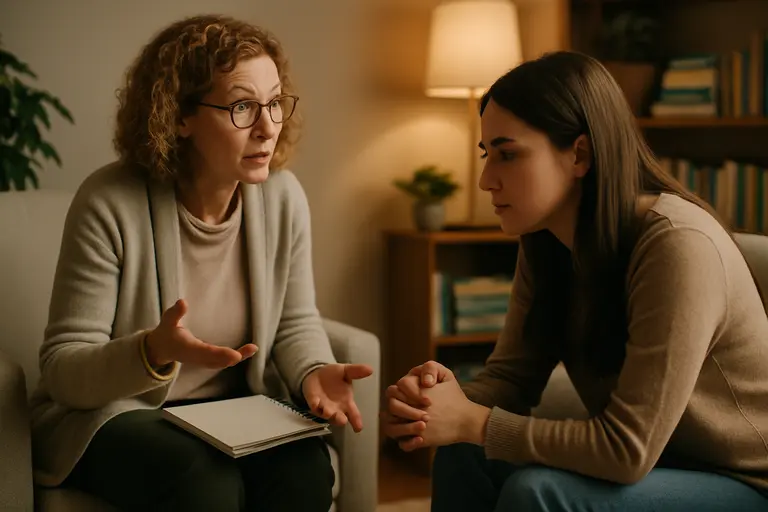
Short Daily Mindfulness may be best understood as a possible support for emotional awareness and stress-related self-regulation, not as a stand-alone answer for mental health conditions. The recent findings support the idea that repeated brief practice can be associated with measurable changes in symptom scores for some groups. They do not prove universal effectiveness, and they do not establish that meditation should replace therapy, medication, crisis care, or other professional support.
What The Findings Support
The two strongest points from the approved recent evidence are consistency and feasibility. In the April 2026 remote trial, adults who had not previously practiced meditation completed a 10-minute daily focused-attention program for 8 weeks, with reported benefits that remained stable during follow-up. In the July 2026 mobile trial, a 21-day routine-embedded approach and a traditional mindfulness approach both performed better than psychoeducation and waitlist control on anxiety and depression scores.
Those findings suggest that duration is not the only factor worth considering. A brief practice repeated regularly may be enough to produce detectable group-level changes in certain study samples. For a foundational discussion of practice design and cautious interpretation, readers may find these daily mindfulness research notes useful.
What The Findings Do Not Prove
The findings do not prove that a particular app, breathing cue, or schedule is best for everyone. They do not diagnose anxiety or depression, and they do not show that meditation alone is appropriate for moderate, severe, or worsening symptoms. They also do not settle whether benefits come from attention training, expectancy, routine, reduced rumination, study contact, or a combination of factors.
Another limit is follow-up duration. An 8-week follow-up is helpful, but it is not the same as knowing whether a practice remains useful after many months or years. A 21-day intervention can show early change, but it cannot answer all questions about maintenance. In evidence-based mindfulness education, restraint matters: a short practice may support some people, but the right level of care depends on individual history, current symptoms, health conditions, medication use, pregnancy status, and access to professional support.
Short Daily Mindfulness Questions For Clinicians
People who are curious about meditation can bring specific, practical questions to a qualified professional, especially if they have a mental health diagnosis, trauma history, panic symptoms, substance use concerns, sleep disruption, or thoughts of self-harm. If there is immediate danger or a risk of self-harm, emergency services or local crisis resources should be contacted right away.
- Does a brief mindfulness practice fit my current mental health needs and treatment plan?
- Are there symptoms that would mean I should pause and seek support?
- Would guided practice, group instruction, or clinician-supported care be safer than practicing alone?
- How should I track changes in mood, anxiety, sleep, or distress without over-monitoring myself?
- What should I do if meditation increases discomfort, agitation, or intrusive thoughts?
Short Daily Mindfulness can be discussed as one possible wellness practice, not as a substitute for evaluation or treatment. The most responsible next step is not to assume benefit, but to ask how a brief practice fits your health history, current symptoms, and support system. Medical advice should be sought from a qualified professional for personal concerns, treatment decisions, or persistent emotional distress.