Mindful decision making is often described as a way to slow down and choose wisely. But its real value is not that it makes every choice safer; it helps reveal the emotions, assumptions, and pressures already shaping a decision. That distinction matters whenever money, uncertainty, excitement, or urgency are involved.
In practical terms, that creates a small gap between stimulus and response. The pause is the skill because it gives the reflective mind time to catch up with the impulse to act.
When Money Raises the Stakes
Sports betting offers a clear example. Someone comparing BetAnything reduced juice odds is looking at reduced-juice pricing that the review identifies on select straight wagers. Lower pricing can be relevant when comparing terms, but price is not permission: it does not make an uncertain outcome predictable or remove the possibility of loss.
Financial decisions are especially vulnerable to emotional momentum because gains and losses can change how the next choice feels. A recent win may create confidence. A loss may create urgency. Attractive pricing can also make an option feel more appealing before the person has considered whether the underlying decision fits a budget or goal.
A mindful bettor would therefore separate two questions: “Are these terms comparatively attractive?” and “Is placing this wager appropriate for me?” Those are not the same decision.
The foundation is simple: mindfulness basics begin with noticing what is happening in the present moment without immediately judging or reacting to it
The Real Value of a Pause
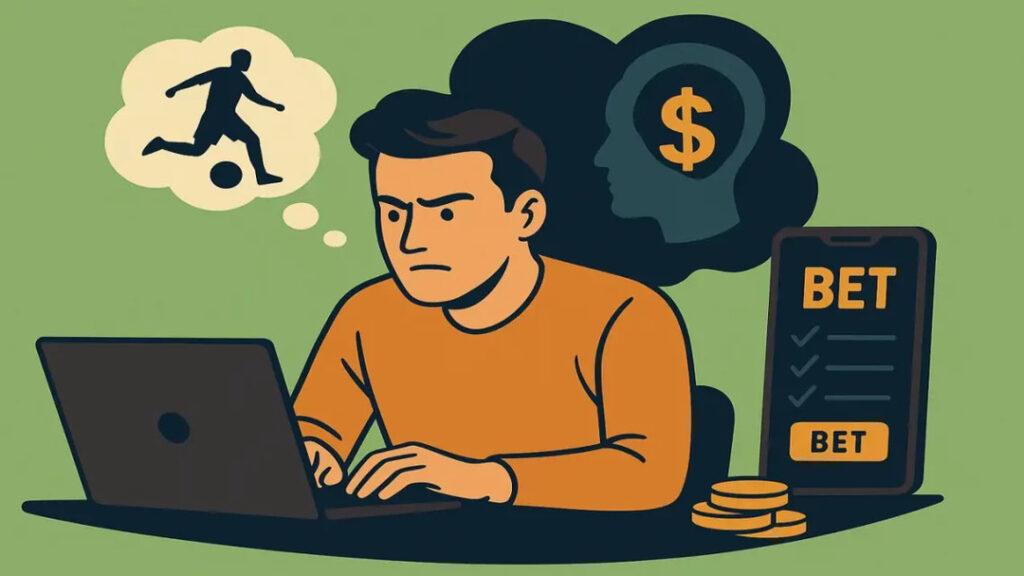
Risky choices rarely arrive wearing a warning label. They often show up as a flash of confidence, fear of missing out, irritation after a setback, or the feeling that a decision must be made immediately.
Mindfulness can make those signals easier to notice. Instead of asking only, “What should I do?” a more useful first question is, “What is influencing me right now?” The answer might be fatigue, social pressure, recent success, frustration, or a desire to escape discomfort.
That does not eliminate emotion. It changes emotion from an invisible driver into information. Once a person can name the pressure, the decision becomes easier to examine rather than simply obey.
Mindful Decision Making Does Not Always Mean Less Risk
One of the most useful corrections to popular mindfulness advice is that awareness should not be confused with caution. A 2026 risk-taking experiment published in Scientific Reports found that brief mindfulness meditation increased risk-taking in two laboratory tasks, with the effect linked to reduced loss aversion. The researchers also warned against assuming that laboratory results automatically transfer to every real-world risk.
That finding complicates the familiar idea that calm people always choose the conservative option. Sometimes reduced emotional reactivity may make a loss feel less threatening. Calm is not certainty, and being present does not replace probability, facts, experience, or consequences.
The better goal is not “take less risk.” It is “see the risk more clearly.”
A Better Process for High-Pressure Choices
Present-moment awareness becomes useful when it changes behavior before the decision is locked in. The following comparison shows how the same situation can produce very different responses.
| Decision moment | Reactive response | Mindful response | Practical safeguard |
|---|---|---|---|
| Excitement after a win | Increase the stake quickly | Notice confidence rising | Return to the preset budget |
| Frustration after a loss | Try to recover immediately | Name the urge to chase | Stop before another decision |
| Time pressure | Act before checking details | Identify what is known and unknown | Delay when more information is available |
| Attractive pricing | Treat lower cost as lower risk | Separate price from uncertainty | Compare terms and total exposure |
| Social pressure | Follow the crowd | Notice the need for approval | Recheck personal goals and limits |
The pattern is straightforward: mindfulness creates space, while structure protects that space. In money-related decisions, limits set in advance are often more reliable than limits invented during excitement.
That principle aligns with current responsible gambling guidance, which recommends setting time and financial limits before wagering and avoiding attempts to chase losses. The broader lesson applies beyond betting: rules created in a calm state can protect judgment when emotion becomes loud.
Signals That Your Judgment Is Getting Narrower
The most useful warning signs are often internal. Watch for urgency that cannot be explained, repeated checking, changing a limit after a loss, searching only for information that supports the choice you already want to make, or telling yourself that one more action will “fix” the previous one.
Another signal is the disappearance of alternatives. When the mind becomes fixated, it can start treating one path as inevitable. A mindful pause restores options: wait, reduce exposure, gather more information, ask someone else, or simply decide not to act.
This is where present-moment awareness earns its practical value. It is not passive observation. It is the ability to notice when attention has become too narrow to support a sound choice.
A Clearer Relationship With Risk
Mindful decision making works best when it is paired with boundaries, information, and a willingness to stop. The point is not to become fearless, hyper-cautious, or endlessly analytical. It is to recognize the difference between a considered risk and an emotionally accelerated one.
That distinction matters now because more decisions are designed to feel immediate: purchases happen in one tap, markets update constantly, and entertainment can turn into financial action with very little friction. Mindfulness does not remove uncertainty from those moments. It gives us a better chance to notice what is happening before momentum decides for us.