Modern life can be overwhelming. We often feel our thoughts racing, our body tense, and our nervous system on edge. It’s hard to find peace.
But what if you had a simple, science-backed tool to change that? This journey introduces a structured approach using daily breathwork and nervous system regulation.
The 21-day timeframe is powerful for habit building and neuroplasticity. It’s a period where consistent practice can forge new, calmer neural pathways.
This progressive program is designed to build your skill and confidence week by week. You start with foundational techniques and gradually deepen your practice.
The goal is clear: move from a state of stress and worry to one of grounded calm. You’ll learn to use these tools when anxiety strikes or your mind won’t settle.
Committing to this structured breathwork program sets a realistic path forward. It’s an investment in creating a lasting, calmer you.
Week 1 (Foundation)
Week 1 turns habit building into action. It introduces basic breathing techniques you can do anywhere. Your aim is not to be perfect but to be consistent. This first week is about starting a simple, reliable routine for your 21-day journey.
Try one of these three main methods every day. Even just five minutes can help. Think of this week as building a strong foundation for a calmer nervous system.
Here are your essential tools for the first seven days. Follow the step-by-step instructions closely.
4-7-8 Breathing (The Relaxing Breath)
This technique is known for quickly reducing anxiety. It slows your heart rate and calms your mind.
- Sit or lie down comfortably. Place the tip of your tongue against the ridge behind your upper front teeth.
- Exhale completely through your mouth, making a whoosh sound.
- Close your mouth and inhale quietly through your nose for a count of 4.
- Hold your breath for a count of 7.
- Exhale completely through your mouth, making a whoosh sound, for a count of 8.
This is one breath cycle. Repeat the cycle three more times. Use it before bed or when you feel stressed.
Sitali Breath (The Cooling Breath)
This ancient practice cools your body and soothes your emotions. It’s great for moments of frustration or feeling too hot.
- Sit with a straight spine. Relax your shoulders.
- Roll your tongue lengthwise into a tube. If you can’t roll your tongue, simply part your lips and place your tongue behind your teeth.
- Inhale slowly and deeply through the “tube” of your tongue or through your parted teeth. Feel a cool sensation.
- Close your mouth and exhale slowly and smoothly through your nose.
Continue for 1-2 minutes. Notice the calming, cooling effect spreading through your body.
Valsalva Manoeuvre (The Calming Reset)
This method stimulates the vagus nerve. It helps slow a racing heart and induce relaxation.
- Take a normal, gentle breath in.
- Pinch your nose shut and close your mouth.
- Gently try to exhale against your closed airway, as if you are blowing up a balloon. Do not strain hard.
- Hold this gentle pressure for 5-10 seconds.
- Release the pressure and breathe normally.
Perform this once or twice when you need a quick reset. It is a powerful tool for immediate calm.
| Technique | Primary Benefit | Best Time to Practice | Suggested Duration |
|---|---|---|---|
| 4-7-8 Breathing | Reduces anxiety, promotes sleep | Evening, before bed, during stress | 4 cycles (about 2 minutes) |
| Sitali Breath | Cools the body, calms emotions | Midday, when feeling frustrated or warm | 1-2 minutes |
| Valsalva Manoeuvre | Slows heart rate, resets nervous system | Anytime you feel overwhelmed or rushed | One or two repetitions |
| Tip: Choose one technique to focus on each day, or mix and match based on your needs. The key is daily engagement. | |||
Your mission this week is simple: practice one technique daily. Link it to an existing part of your routine, like your morning coffee or evening wind-down. This connection strengthens the new habit building process.
Remember, consistency builds the foundation. Master these three breaths, and you will have powerful tools ready for any challenge.
Week 2 (Balance & Focus)
This week, you’ll learn to release physical tension and train your attention. You’ll use movement, sound, and meditation. This goes beyond just breathing to build a strong stress response system.
Your daily practice now involves your whole being—body, voice, and mind. This is a big step towards becoming more balanced and focused.
Progressive Body Relaxation is a key technique for releasing physical stress. You’ll tense and then release different muscle groups, starting from your toes to your forehead. This practice helps you feel the release of tension.
Mindful walking turns a simple activity into a grounding exercise. Try a nature hike to engage your senses. Or, practice sauntering—a slow, aimless stroll. Both methods help break cycles of rumination and connect you with your environment.
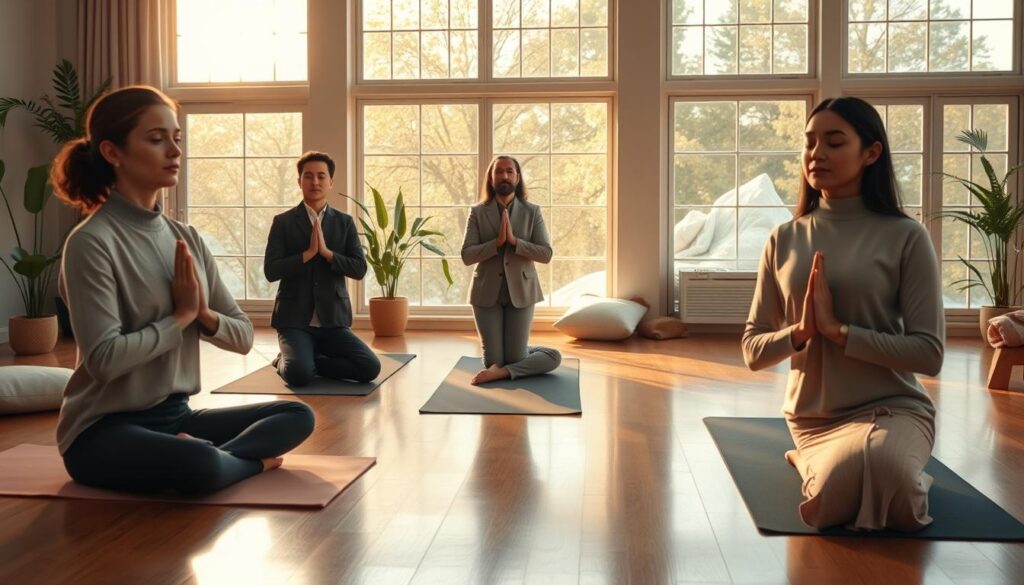
Your voice becomes a tool with conscious humming. Humming stimulates the vagus nerve, calming your nervous system. Just hum for a few minutes, feeling the vibrations in your chest and head.
The meditation for this week is a concentration practice. Sit comfortably and focus on your breath. When your mind wanders, gently bring it back. This trains your attention and reduces mental clutter.
These practices work together to create a powerful synergy. Body relaxation, mindful walking, humming, and concentration meditation all play a role. They ensure you have the right tools for different types of tension.
Commit to this blended practice for the next seven days. You’re not just doing exercises; you’re cultivating balance and focus. This routine is the foundation for deeper work in Week 3.
Week 3 (Depth & Sleep)
Week 3 is where your hard work really pays off. You’ll start practices that help you relax deeply and sleep better. This phase goes beyond just handling daily stress. It focuses on healing your nervous system and improving your sleep habits.
Your goal is to turn your calming habit into a powerful tool for true rejuvenation.
Sound can lead you to deep relaxation. A Sound Bath uses instruments like singing bowls, gongs, or chimes. These vibrations help quiet your mind and release tension.
You can try this online. Many websites offer guided sound bath sessions. Just find a comfy spot, lie down, and listen.
Autonomous Sensory Meridian Response (ASMR) is another great tool. It uses soft sounds or whispers that cause a pleasant, tingling feeling. This can be very calming for many. Look for different ASMR videos to see if it works for you.
Deepen Your Meditation Practice
Your meditation can now grow from simple breath awareness. Try a mindfulness practice where you watch your thoughts without judgment. Or, use a mantra meditation with a repeated word or phrase to focus your mind.
This deeper focus quiets your nervous system better. It’s great for the hour before bed. For more tips, check out this resource for creating an evening mindfulness routine. It can help make your evening routine better.
Supportive Lifestyle Tweaks
What you eat and where you spend time supports your inner work. Some foods can help ease anxiety. Try adding these to your diet:
- Dark Chocolate: Rich in magnesium and flavonoids.
- Salmon: Full of omega-3 fatty acids.
- Green Tea: Contains L-theanine, which relaxes you.
Also, spend time Sit By Water! Being near water, like lakes or rivers, has a calming effect. The sight and sound of water can slow your heart rate and breathing.
Adding these elements—sound, deeper meditation, and supportive habits—makes your daily routine richer. They offer a complete approach to rest. If you want a more structured path, consider a dedicated structured breathwork course.
By the end of this week, these practices will be a natural part of your life. They become the foundation of your routine for lasting calm and great sleep. This consistent routine is your key to a balanced and peaceful mind.
Printable Calendar & Trackers
To make your breathwork journey consistent, we offer printable tools: a calendar and trackers. These tools make the 21-day program easy to follow. You can hold them in your hands or keep them on your screen.
Your printable calendar is the heart of the program. It shows all 21 days in a clear layout. Each day guides you through different breathwork practices, from Week 1 basics to Week 3 deep dives.
This calendar takes away the guesswork. You always know what to do next. It helps you stay focused and see your commitment clearly.
The habit trackers are for logging your daily practice. Record your session, its length, and any feelings you noticed. Logging your practice boosts self-awareness and consistency.
As you fill out your tracker, you’ll see your progress. Seeing a streak of completed days motivates you to keep going. It turns your effort into something you can see and be proud of.
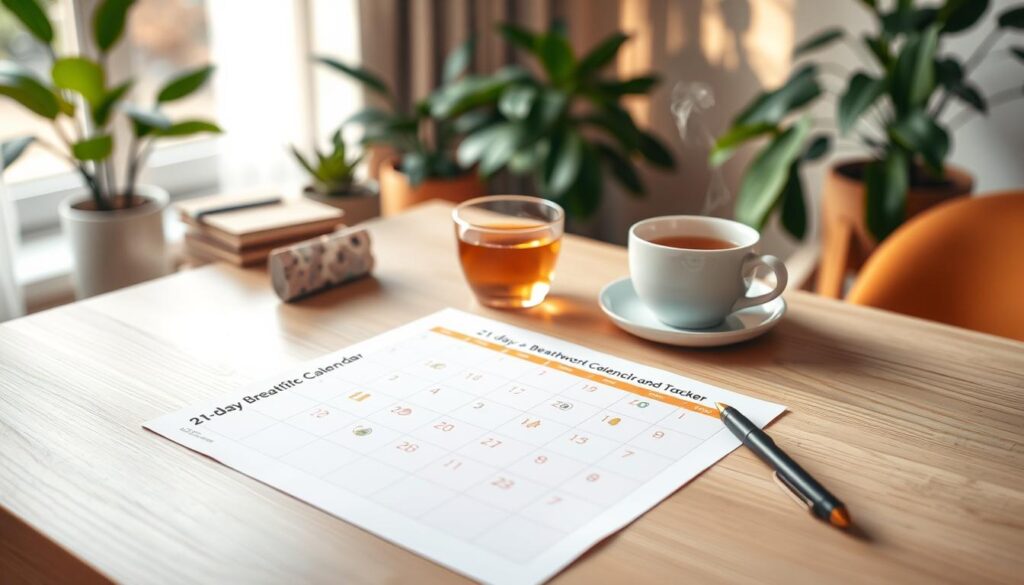
These tools work together to help you succeed. The calendar gives you structure and a roadmap. The trackers keep you accountable and show your progress. Using them daily strengthens your commitment and sense of achievement.
To see how these tools help, here’s a comparison:
| Tool | Primary Function | Key Benefit | Best For |
|---|---|---|---|
| Printable Calendar | Provides the daily schedule and overall program roadmap. | Reduces mental load by showing you exactly what to do each day. | Planning your week and understanding the program flow. |
| Habit Tracker | Allows you to log your daily practice and observations. | Creates a visual chain of success, boosting motivation and consistency. | Building daily accountability and reflecting on your personal progress. |
Print these tools and place your calendar where you see it every morning. Keep your tracker with your journal or near your meditation spot. Start using them from Day 1 to build momentum and make breathwork a part of your routine.
Troubleshooting Busy Days
Your calendar is full, but you can keep calm. Busy times are common, not a sign of failure. This section offers practical tips to keep up with breathwork, even when days are tough.
Remember, the key is the ratio of your breath, not exact timing. If a technique doesn’t work for you, try something else. The goal is to be consistent, not perfect.
When time is tight, try these flexible methods:
- Mini-Sessions: Even 2 minutes of 4-7-8 breathing at your desk is better than nothing.
- Combine Tools: Mix a 5-minute box breathing with your morning coffee. Use your commute for nasal breathing. Add breathwork to your daily routine.
- Emergency Technique: Have a quick, reliable method from early weeks to use anywhere in under 3 minutes.
Below is a table to match busy-day scenarios with breathwork strategies. It turns challenges into solutions.
| Busy Day Scenario | Adapted Breathwork Strategy | Primary Tool Used | Time Saved |
|---|---|---|---|
| Back-to-Back Meetings | 60-second “Power Reset”: 4-count inhale, 4-count hold, 8-count exhale (2 rounds) | 4-7-8 Breathing | ~9 minutes |
| Overwhelming Afternoon Slump | Energizing “Bellows Breath” (Bhastrika) for 90 seconds at your workstation | Week 2 Energizing Techniques | ~8.5 minutes |
| Pre-Bedtime Rush, Mind Racing | Progressive 4-7-8 while already in bed: focus solely on lengthening the exhale | 4-7-8 & Week 3 Sleep Focus | Full session time |
| Unexpected Family/Work Crisis | Immediate “Sighing Breath” (audible exhale) followed by 1 minute of box breathing | Week 1 Foundation & Physiological Sigh | ~14 minutes |
Your printable calendar helps plan for these adjustments. At the start of a busy week, look at your schedule and pencil in the best technique for each day. Seeing it on your calendar makes it a real commitment to yourself.
Missing a session is okay. The program is designed to be flexible. Just go back to your plan or calendar the next day. A flexible mindset keeps your breathwork practice a support, not a stress.
What’s Next After 21 Days
You’ve started strong with this 21-day breathwork program. Now, it’s time to make these breathing techniques a part of your daily life. This will help you see lasting changes.
Think about setting up a simple weekly routine. Choose your top breathing practices from the program. Use them at the same time every day, like in the morning or before bed. This makes your new skill a habit.
If you’re looking for more, the Nervous System Regulation MEGA-TOOLKIT is a great next step. It has 115 tools and techniques to help you feel calm, happy, and connected.
See these 21 days as just the start of your journey. Emotional self-regulation grows with practice. Keep breathing and you’ll stay calm and focused.