We’re in the middle of a stress epidemic in America. More people are stressed than ever before. Daily stress affects 55% of Americans, and 63% are so anxious they want to quit their jobs.
Guided meditation is an ancient practice for today’s stress. It’s like having a personal guide to calm, even when your brain is racing.
This practice calms your brain’s stress center and activates your calm center. It’s like hitting a reset button on your stress response.
Experts from all fields praise it. But here’s the key: you don’t need to clear your mind or reach enlightenment. As one expert says, “We meditate to get better at life, not to get better at meditation.”
Let’s see how this tool can help us fight off today’s stress.
Best Types for Beginners
Meditation styles are like dating profiles. Some need a big commitment, while others are great for casual fun. Beginners should look for easy options that won’t leave you feeling abandoned after one try.
NSDR (Non-Sleep Deep Rest) is a favorite among scientists. It was created by Andrew Huberman. This method gives you deep sleep benefits without falling asleep. It’s like a secret hack for your brain.
For newbies, traditional mindfulness meditation is the top choice. It teaches you to watch your thoughts without judgment. It’s like being the calm observer of your own mind.
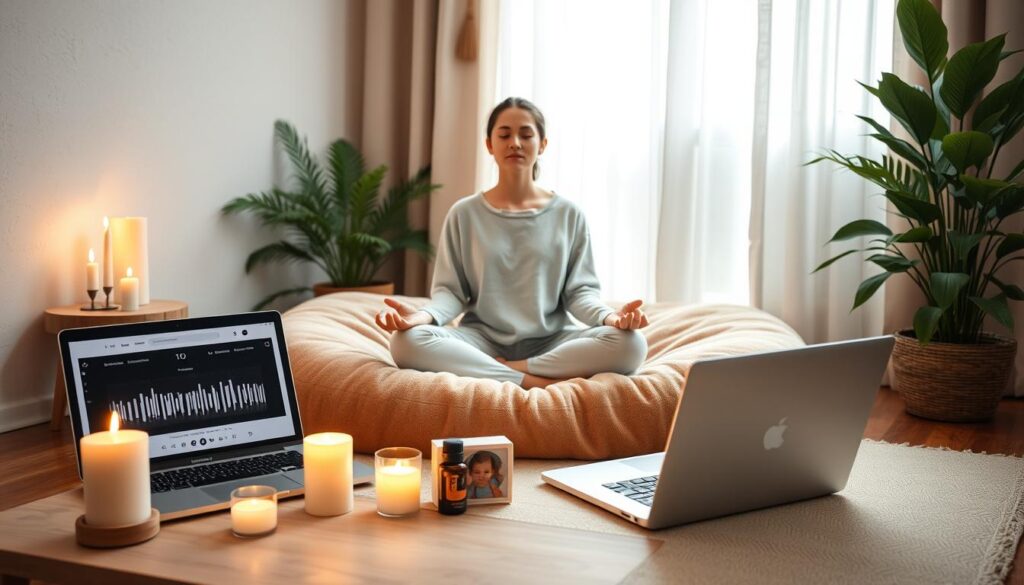
Hypnosis meditation helps change negative thoughts. It’s like hitting the reset button on your mind. Experts use special audio sessions to guide you.
Candle meditation (Trataka) helps those who find it hard to meditate with their eyes closed. Looking at a flame helps keep your mind focused. It’s a great way to avoid thinking about embarrassing moments.
When you meditate in the morning, you set a positive tone for the day. Evening sessions help you relax and prepare for sleep. They keep you from worrying about tomorrow.
Mantra meditation uses repeating words to calm your mind. It’s like a mental screensaver that stops your brain from getting overwhelmed.
Most beginner-friendly meditations are available as audio files. You can find guided sessions on platforms like Mindvalley and Meditation Mountain. It’s like having a personal meditation coach with you always.
| Meditation Type | Best For | Time Commitment | Audio Availability |
|---|---|---|---|
| NSDR | Quick recovery | 20 minutes | Full audio guides |
| Mindfulness | Daily practice | 10-30 minutes | Extensive audio library |
| Hypnosis | Pattern breaking | 15-45 minutes | Professional audio sessions |
| Candle | Visual learners | 5-15 minutes | Minimal audio guidance |
| Mantra | Mental focus | 10-20 minutes | Audio repetition tracks |
Body scan meditation is great for beginners. It helps you focus on your body and emotions. It’s very good for reducing stress.
The best thing about these beginner options? They’re easy to start with. Each style has clear audio guidance. You’re not trying to become a meditation expert right away. Just aim to be a little better each day.
Where to Find Guided Meditations
Finding good guided meditations online is like finding common ground in Congress. It’s possible but hard to find. The main challenge is finding the right ones.
Mindvalley is a great place to start. They offer free daily meditations. It’s like trying samples at Costco. You can decide if you like it without committing.
If you like the free meditations, Mindvalley has more. Their membership gives you access to many meditation series. The Silva Ultramind System is a standout for stress relief.
Meditation Mountain on Spotify is perfect for busy people. Their meditations are short, 10-20 minutes. They cover stress relief and forgiveness, helping you deal with tough emails.
These platforms know that everyone is different. They offer meditations for stress, sleep, and more. Whether you need a quick break or a deep meditation, there’s something for you.
For more options, check out our comprehensive resources page. Quality is more important than quantity when it comes to mental clarity.
| Platform | Best For | Time Commitment | Cost |
|---|---|---|---|
| Mindvalley Free Tier | Beginners & commitment-phobes | 5-15 minutes daily | Free |
| Mindvalley Membership | Deep transformation seekers | 15-30 minutes sessions | Subscription |
| Meditation Mountain | Time-crunched professionals | 10-20 minutes | Free (Spotify) |
| NSDR Protocols | Sleep optimization & recovery | 20-30 minutes | Varies by platform |
The table shows how different platforms meet different needs. Each service has its own niche. This shows that meditation has evolved to fit everyone’s needs.
The digital world offers many meditation options. These options respect your time and intelligence. The best part? They make relaxation something you want to do, not just another task.
Creating a Calming Setting
Think of your meditation space as a special place for your mind. It’s a place where the world outside doesn’t bother you. You can’t find peace with distractions around.
The first rule of guided meditation club: find a quiet spot. In 2024, you might need to tell your family you’re not ignoring them. You’re just taking a break from the world.

Your phone can be a big distraction. Turn it off before it takes over your meditation. Airplane mode is your friend, helping you stay focused.
Breathing techniques help calm you down. Try the “fog the mirror” method. It helps your body relax and reduces stress.
Intentional breathing is like exploring your body. It’s not just breathing; it’s a journey inside yourself.
Being consistent is more important than how long you meditate. A short, daily guided meditation is better than a long one with distractions.
| Setting Element | Common Mistake | Pro Solution | Impact Level |
|---|---|---|---|
| Physical Space | Meditating wherever you happen to be | Dedicated corner with comfortable seating | High |
| Digital Boundaries | Phone on vibrate nearby | Device in another room or airplane mode | Critical |
| Time Management | Waiting for “perfect” long sessions | Consistent short daily practice | High |
| Sensory Environment | Bright overhead lighting | Soft lamps or natural light | Medium |
Creating the right environment is key. It’s about making a space where you can focus. You can build a meditation routine that fits your life, no matter where you live.
Your meditation space is about your mind, not fancy decor. It’s where you can focus without distractions.
Evaluating What Works for You
Finding your meditation sweet spot isn’t about spiritual achievement. It’s about discovering what makes you want to meditate tomorrow. Your perfect audio guide might be a Zen monk’s monotone or a celebrity’s soothing narration.
The real test isn’t enlightenment. It’s whether you consistently return to meditation.
Track your mental state like a stock portfolio. Does body scan audio make you aware of tension or just obsessed with that weird toe tingle? Does mantra repetition quiet your mind or just give your anxiety a catchphrase?
As Tricycle suggests, effective evaluation means noticing immediate benefits and long-term gains in compassion and ease.
The best audio guided meditation is the one that feels less like obligation and more like mental comfort food. If after weeks you’re not enjoying it, maybe it’s time to try something else. Maybe you need nature sounds or progressive muscle relaxation.
Your practice should leave you feeling refreshed, not like you’ve wasted time.
Remember: nobody gets a trophy for suffering through meditation they hate. The goal is finding what makes present-moment awareness feel less like work and more like discovering your brain’s favorite playlist.