
Digital mindfulness interventions are being studied as one way to support first responders during and after high-pressure work. The appeal is easy to understand: a phone-based practice can be brief, portable, and available between calls or shifts. Still, the evidence does not show a simple stress-off switch. The best reading is more careful: some digital practices may soften stress reactivity for certain groups, while other outcomes remain uncertain and should be interpreted with professional guidance.
As a holistic wellness educator, I often describe breath and attention practices as community skills, not private fixes for system-level strain. First responders face stressors that can be sudden, repeated, and intense. A guided exercise may help create a pause, but it cannot replace adequate staffing, peer support, sleep, training, leadership practices, or access to qualified mental health care. Anyone experiencing severe distress, trauma symptoms, thoughts of self-harm, or functional decline should seek help from a qualified health professional or emergency support right away.
What Digital Mindfulness Interventions Studied
Smartphone Guidance After Stressor Exposure
A micro-randomized trial published on August 10, 2026, studied 75 first responders over 30 days. Participants had an average age of about 38.9 years. The researchers tested two smartphone-delivered supports: brief text reminders and guided mindfulness through the MYAPT.MIND app. The main finding deserves careful wording. Neither approach reduced momentary stress outright, but the guided app group showed significantly smaller increases in stress after self-reported stressor exposure when compared with brief messages or no intervention, according to the micro-randomized trial.
That distinction matters for acute stress. A tool may not make stress disappear, yet it may change the size or speed of the stress response after a difficult event. For first responders, digital mindfulness interventions may be most realistic when framed as brief recovery supports rather than stand-alone care. In breathwork language, the aim is not to force calm. The aim is to notice activation, steady attention, and create enough room for the nervous system to settle when conditions allow.
However, digital interventions should not be over-relied upon as they can’t address all facets of stress exposure. Real-world stressors faced by first responders need comprehensive strategies that include digital mindfulness as one component of a broader toolkit. This ensures a balanced approach that respects the complexities and unpredictable nature of responder work.
Emergency Dispatchers and Online Training
The Destress 9-1-1 randomized controlled trial, conducted between 2016 and 2017, studied 323 emergency medical dispatchers in the United States and Canada. Participants received a seven-week online mindfulness-based intervention. After the program, stress measured by the Calgary Symptoms of Stress Inventory dropped by 10.0 points, with a 95% confidence interval from -14.9 to -5.2 and p < 0.001. At three-month follow-up, the reduction was still present at 6.5 points, with a 95% confidence interval from -11.9 to -1.1 and p = 0.02, as reported in the Destress 9-1-1 trial.
This study involved emergency medical dispatchers rather than every type of field responder, so it should not be stretched too far. Dispatch work has its own demands: rapid decision-making, emotional exposure through calls, limited physical control over events, and shift-based strain. Even so, the trial suggests that structured online mindfulness training can be feasible to study in emergency-response occupations and may reduce measured stress in at least some settings.
Moreover, online training offers accessibility and flexibility, critical factors for emergency workers often constrained by rotating shifts and diverse operational demands. Such interventions, if properly integrated, can be a valuable addition to holistic support efforts within emergency services.
Reading the Evidence Without Overstating It
Why Digital Mindfulness Interventions Did Not Remove Stress
The 2026 smartphone trial is especially useful because it did not simply ask whether a mindfulness app felt helpful. It examined momentary stress around real-world stressor exposure. The result was mixed: no clear reduction in momentary stress overall, but a smaller stress increase after stressors in the guided app condition. That pattern fits what many breathwork teachers see in practice, while still needing scientific caution. A person may still feel stress, yet recover with a little more steadiness.
There are several reasons not to overstate the finding. The trial included 75 people, which is informative but not large enough to answer every question about responder roles, shift schedules, trauma exposure, age, sleep, or prior meditation experience. The stressors were self-reported, and the intervention lasted 30 days. The study helps identify a possible signal, not a universal result.
Evaluating the long-term implications of these interventions requires ongoing research and nuance. We must consider the contextual factors unique to each responder group, ensuring that mindfulness programs are adaptable and detailed according to specific needs and dynamics.
What Online Programs May Add
The Destress 9-1-1 trial had a larger sample and tested a longer seven-week online program. Its stress reductions were measured after the intervention and again three months later. That gives the result more practical weight for workplace wellness planning, especially because emergency communications centers need options that can be accessed across locations and schedules.
Even here, caution remains appropriate. A group-level reduction does not tell us whether every participant benefited, how much support each person needed, or whether the same approach would work for firefighters, paramedics, law enforcement officers, or mixed public safety teams. Stress is shaped by workload, sleep, traumatic exposure, leadership, family responsibilities, health history, and access to care. No app or online course can ethically be presented as a substitute for professional evaluation when symptoms are intense, persistent, or impairing.
These insights highlight the necessity for further evidence-based research, particularly in terms of how digital mindfulness interventions can integrate effectively within existing health and wellness protocols.
Community Wellness and Practical Use
Brief Practices Need Supportive Systems
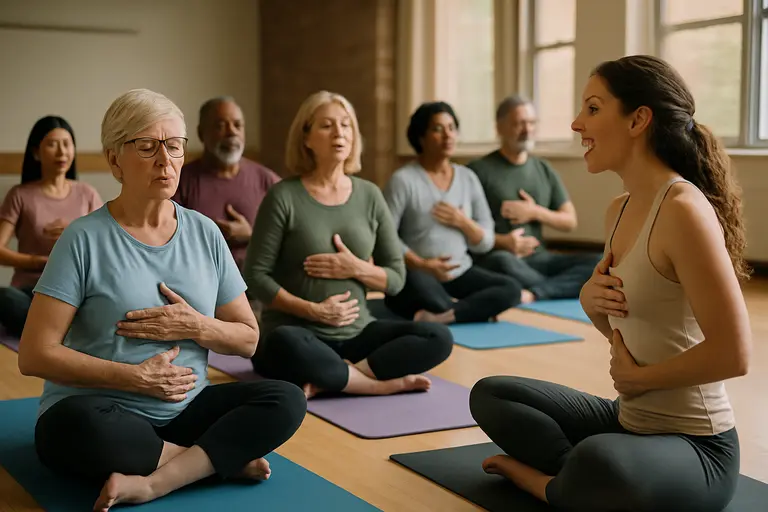
Digital mindfulness can be most useful when it is placed inside a wider culture of care. A guided breathing practice after a hard call may support a short pause. A structured online course may teach awareness skills over several weeks. But responders also need realistic break policies, peer connection, confidential care pathways, sleep-protective scheduling where possible, and leadership that treats stress as a workplace health issue rather than a personal weakness.
For readers who want related education on app-based stress skills, this site has discussed guided mindfulness apps with similar caution. The common thread is not that digital tools are inherently good or bad. The key question is whether the tool matches the setting, the user’s needs, and the level of professional support available.
Community wellness strategies include training for awareness and understanding among all organizational levels, from senior leaders to new recruits. A culture that values resilience and offers shared practices supports the teamwork essential for effective public safety operations.
Breathwork as a Shared Pause
In community wellness, breathwork is often most sustainable when it is simple and non-performative. Responders do not need another task that feels like a test. A short practice might include noticing the feet, softening the jaw, lengthening the exhale, or silently naming what is present. These examples are educational, not medical instructions. People with respiratory, cardiovascular, pregnancy-related, neurological, panic-related, or other health concerns should ask a qualified professional what is appropriate for them.
Community education also matters beyond one agency or station. Public-facing wellness outlets, including Daily California, can help normalize careful conversations about stress, recovery, and evidence rather than quick fixes. That shared language can reduce stigma while still respecting the limits of what a digital practice can do.
An integrated approach to breathwork can enhance individual and communal health, combining traditional methods with modern tools while ensuring each individual’s safety and wellness considerations are respected and addressed.
Digital Mindfulness Interventions and Clinician Questions
Questions to Ask Before Using a Program
Digital mindfulness interventions may be reasonable to consider as one part of a stress management plan, especially when the program is structured, privacy-aware, and not marketed with exaggerated claims. First responders and agencies should be cautious about tools that promise extreme outcomes, imply that trauma exposure can be solved by breathing alone, or collect sensitive data without clear safeguards.
- Is the program meant for acute stress, general stress skills, trauma support, sleep, or workplace wellness?
- What evidence exists for the specific population using it?
- How are privacy, app data, and employer access handled?
- What support is available if difficult emotions arise during practice?
- How will the tool fit with peer support, medical care, counseling, and crisis resources?
These questions are practical, not pessimistic. They help keep mindfulness in its proper place: a potentially useful skill set that may support awareness and regulation, but not a replacement for diagnosis, treatment, or urgent care. If symptoms include panic, intrusive memories, severe sleep disruption, substance misuse, depression, suicidal thoughts, or difficulty functioning at work or home, medical advice should be sought from a qualified professional.
A Cautious Path for First Responder Stress Care
The current research suggests a measured path. Brief smartphone guidance may reduce the rise in stress after stressor exposure for some first responders. A seven-week online mindfulness-based program reduced measured stress among emergency medical dispatchers in a randomized trial. These findings are meaningful, but they are not a blanket recommendation for every person, department, or health condition.
Before adopting digital mindfulness interventions, discuss fit with a qualified clinician, occupational health professional, or mental health provider familiar with first responder stress. Ask whether the program is appropriate for your health history, current symptoms, medications, sleep patterns, trauma exposure, and job demands. The most responsible use is not to replace care, but to add a carefully chosen pause within a larger system of professional support and community wellness.